

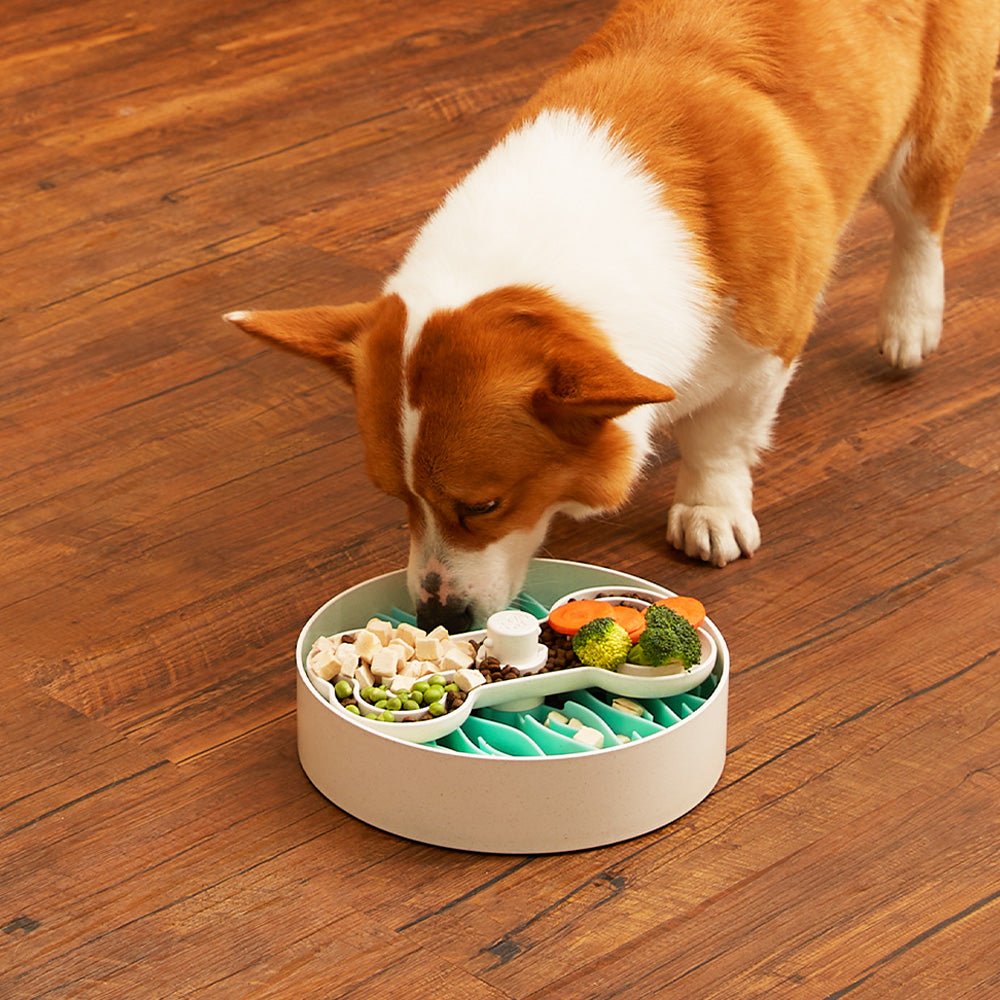
Most dogs push their food bowl around because of instinct, not bad manners: they are "caching" food the way wild canines bury leftovers, trying to get kibble out of a bowl that is awkward to eat from, or telling you mealtime is too easy or too boring. A sliding, noisy or too-deep bowl, a full belly, or a dog who wants to play can all trigger it. The fix is usually simple: steady the bowl, check the portion, and give your dog's nose a real job at dinner.
Why does my dog nudge his bowl with his nose?
That nose-shove has a few common explanations. Watching when it happens tells you which one fits your dog.
- Caching instinct. Wild canines push dirt over food they want to save for later. A dog who nudges the bowl, or pushes kibble toward a corner, is often doing a living-room version of "bury it for later." You'll often see this when the bowl is still half full.
- The bowl is annoying to eat from. Lightweight bowls slide, metal bowls clang against ID tags, and deep bowls squash whiskers and noses. Pushing the bowl to a wall or tipping it is your dog's way of making food easier to reach.
- He's not hungry right now. If your dog gets plenty of treats or table scraps, or the portion is generous, the nudge can mean "not this, not now."
- Mealtime is too easy. Dogs are built to sniff, search and work for food. A plain bowl gives them nothing to do, so some dogs invent their own game by pushing, flipping and chasing it around the kitchen.
- Attention and timing. Plenty of dogs learn that bowl-banging gets a human to show up. If the bowl is empty when it starts, your dog may be asking for seconds or reminding you dinner is "late."
Is it normal for a dog to push food out of the bowl and eat it on the floor?
Yes, it's a common quirk. Some dogs carry mouthfuls to a rug or another room before eating. Reasons include wanting to eat away from a busy spot, not liking the bowl's noise or shine, or (in multi-dog homes) moving food away from another dog. If your dog eats normally and seems relaxed, it's usually harmless, just messy. If you have more than one dog and there's stiff body language or growling around food, feed them in separate spaces and talk to a trainer.
How do I stop my dog from pushing his food bowl around?
Work through these in order. Most dogs improve after the first two or three.
- Steady the bowl. Use a bowl with a non-slip base or set it on a rubber mat so it can't skate across the floor.
- Remove the noise. If your dog wears jingly tags, try a tag silencer or a quieter bowl material.
- Check bowl depth and size. Flat-faced breeds and small dogs often prefer a shallower, wider bowl.
- Check the portion. Measure meals and count treats. If your dog regularly leaves food and pushes the bowl, ask your vet whether the amount is right.
- Use set mealtimes. Put food down for 15 to 20 minutes, then pick it up. Dogs on a predictable schedule tend to eat with more focus.
- Don't reward the bowl-banging. If the clatter is a request for attention, wait for a quiet moment before you respond.
- Give the instinct a job. This is the step most people skip. If your dog wants to nose, push and forage, let dinner do that on purpose.
Can a puzzle feeder help a dog who plays with his bowl?
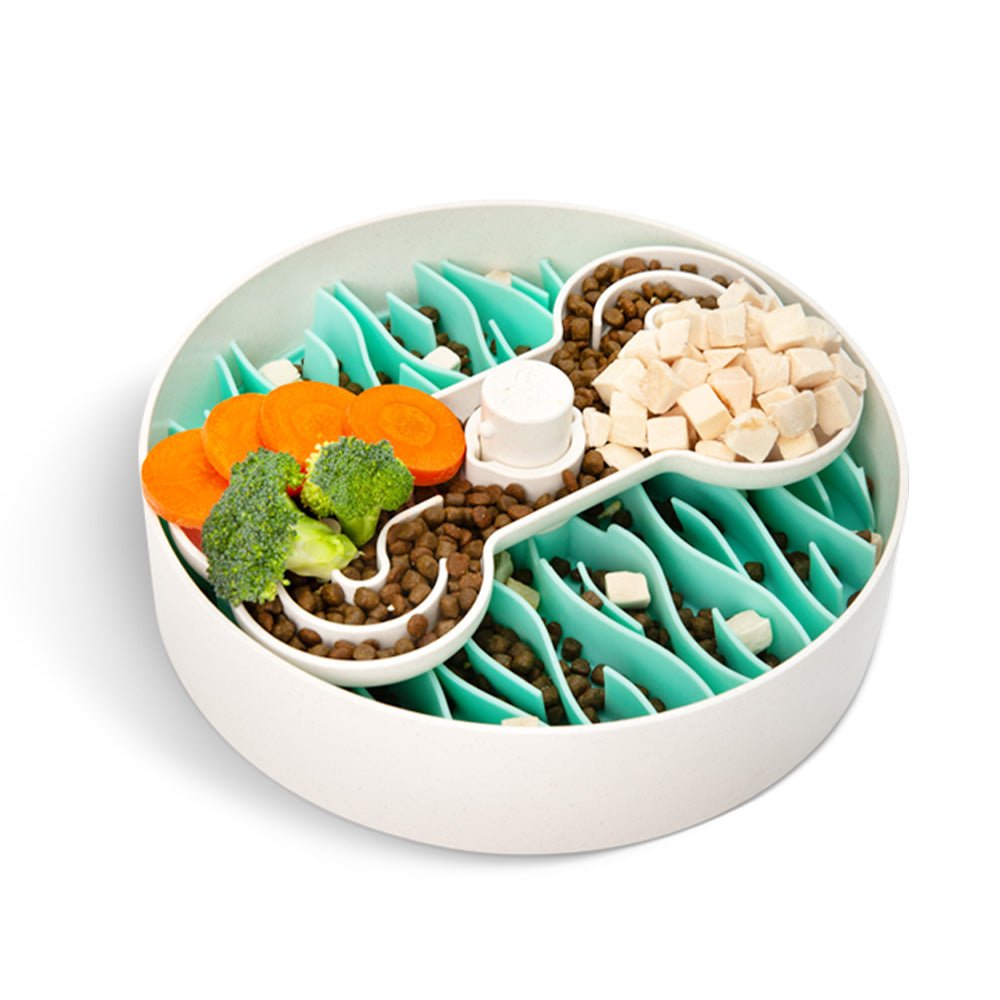
For many dogs, yes. A dog who nudges and pushes food around is already trying to forage. A puzzle feeder turns that urge into the meal itself, so the energy goes into sniffing and working out each bite instead of shoving a bowl across the tile.
| What your dog does | What it often means | What to try |
|---|---|---|
| Shoves the bowl into a wall | Bowl slides or is hard to reach into | Non-slip base, shallower bowl |
| Noses kibble into a corner | Caching / "save it for later" | Smaller portion, set mealtimes |
| Flips or chases the bowl | Meal is too easy or boring | Puzzle feeder or snuffle mat |
| Carries food to another room | Wants a quieter spot, or other dogs nearby | Calm feeding spot, separate dogs |
| Bangs an empty bowl | Asking for more or for attention | Ignore the noise, keep the schedule |
A few options that fit this habit:
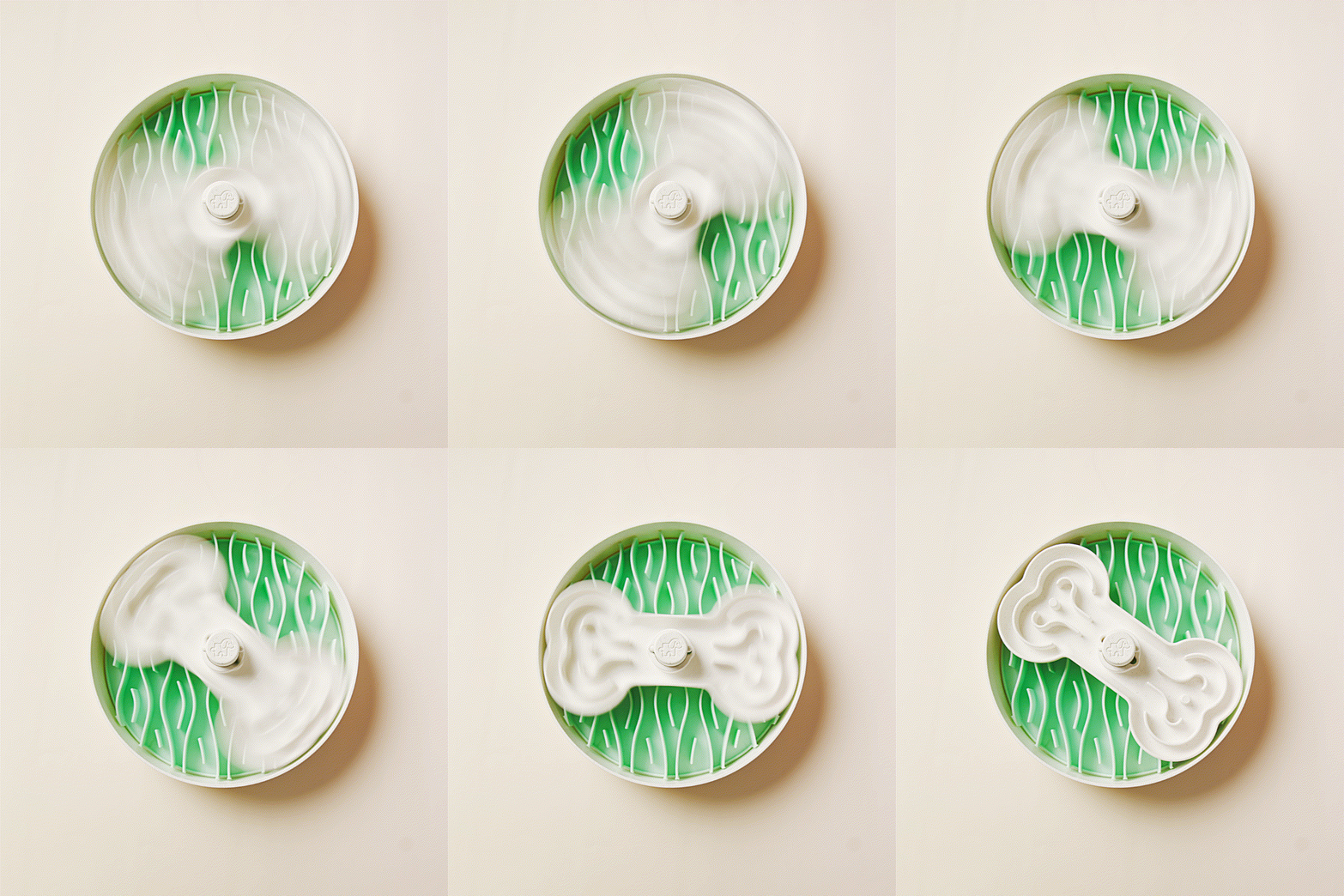
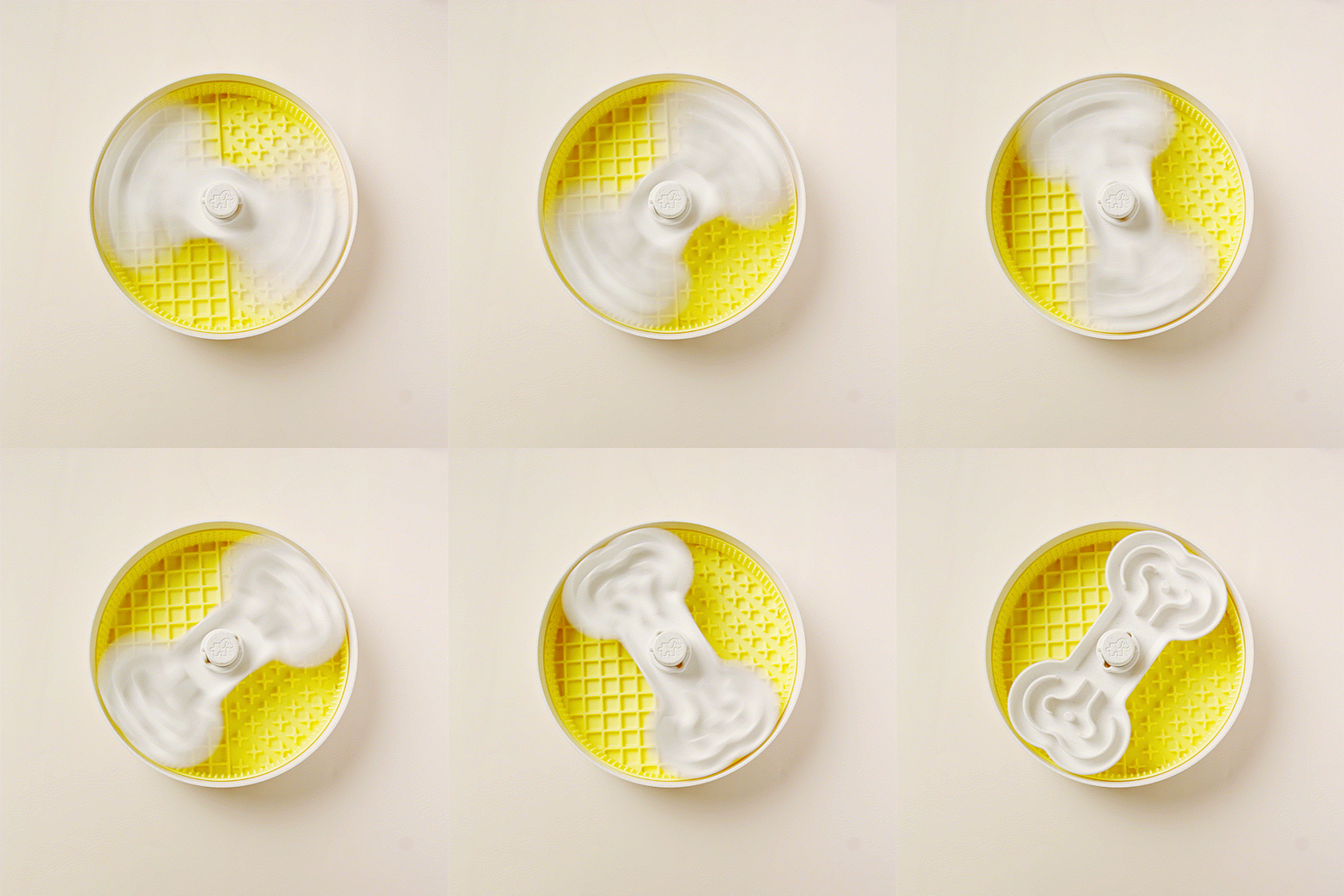
- The Puzzle Feeder Wave has 3 modular parts and 4 feeding modes, so you can start easy and add challenge as your dog figures it out. It can make meals up to 15x slower.
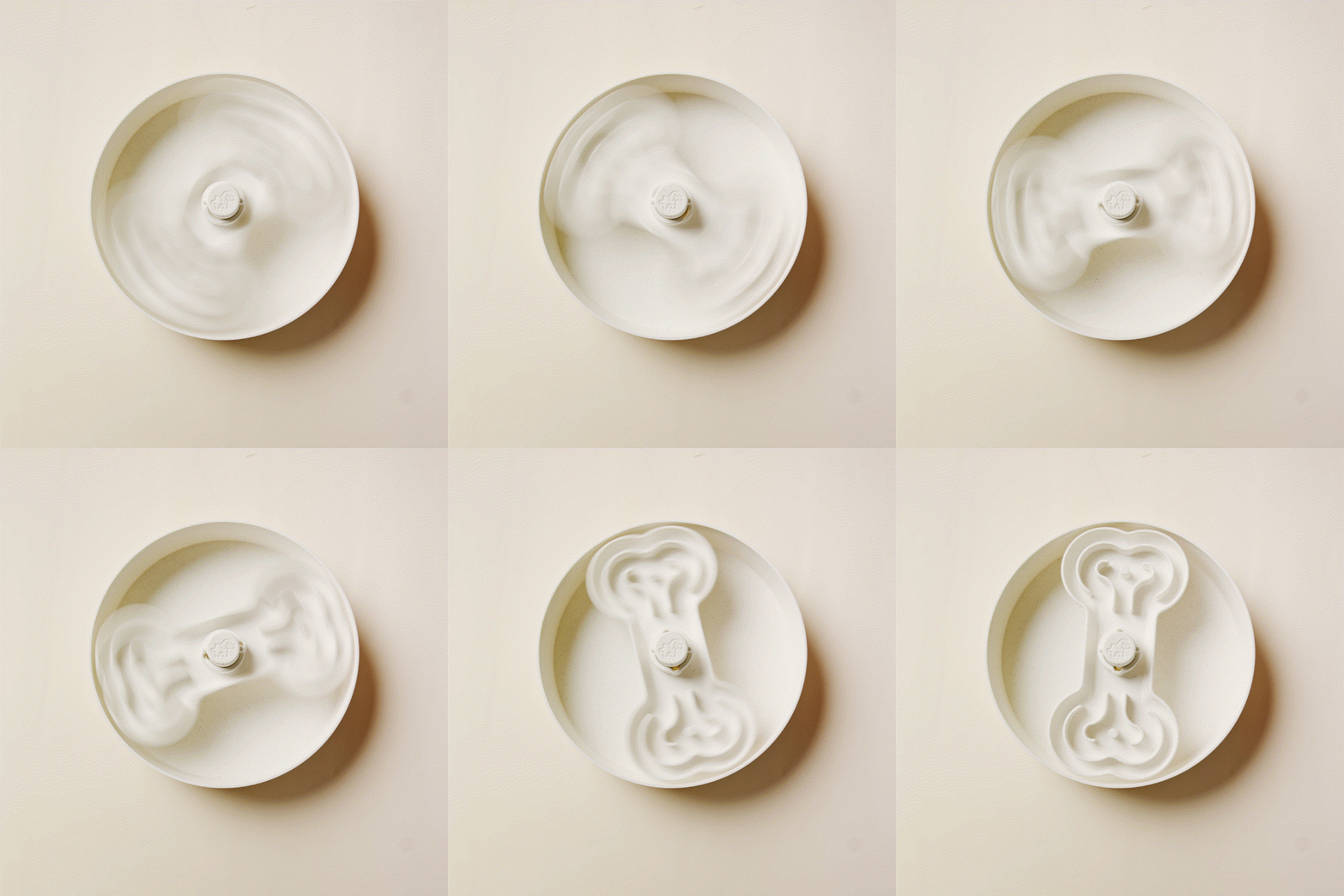
- The Puzzle Feeder Swirl uses a spiral maze, which suits dogs who love to nudge food along with their nose.
- The Grass Snuffle Mat has 336 leaves to hide kibble in. It's a good match for "diggers" and cachers who want to search, not just eat.
Introduce any new feeder on the easiest setting with a few high-value pieces so your dog wins quickly. Then build up. If you need a refresher, see our guide on how to make a slow feeder harder once your dog gets the hang of it.
When should I worry about my dog pushing his food away?
A lifelong quirk is rarely a problem. A new change is worth a closer look. Call your vet if pushing food away comes with eating less, dropping food from the mouth, chewing on one side, drooling, vomiting, weight loss or low energy. Those can point to dental pain, an upset stomach or something else that needs a professional to check. Puzzle feeders are for enrichment and pacing, not a treatment, so ask your vet first if your dog has a health condition.
FAQ
Why does my dog push his bowl with his nose but still eat?
Usually it's caching instinct or a bowl that slides or is hard to reach into. If he finishes the meal and seems happy, steady the bowl and give him a feeder that lets him nose around on purpose.
Why does my dog flip his empty food bowl?
Most often he's asking for more, checking for crumbs, or getting your attention. Keep mealtimes consistent and avoid responding to the clatter.
Is a metal bowl bad for dogs who push their bowls?
Not bad, but lightweight metal bowls are noisy and slide easily, and some dogs dislike the clang or shine. A heavier bowl or one with a non-slip base often solves it.
Should I hand-feed a dog who keeps pushing his food bowl?
Occasional hand-feeding is fine for training. Doing it every meal can teach your dog to wait for service. A puzzle feeder or snuffle mat keeps the engagement without making you the bowl.
Is this behavior more common in certain dogs?
Dogs with strong foraging or working drives, and very food-motivated dogs, often show it more. But any dog can pick it up, especially if meals are quick and unchallenging.
The bottom line
Bowl-pushing is your dog's instinct talking: bury it, reach it, or make dinner more interesting. Steady the bowl, check the portion, and give that busy nose a real job. Want to try a puzzle feeder? Use code PZFDNEW10 for 10% off the Shop All collection, plus free US shipping on orders $40+ (Canada $60+ CAD) and 30-day returns.
Not sure which feeder fits your dog's size and eating style? Read Which Puzzle Feeder Is Right for My Dog?


Leave a comment
All comments are moderated before being published.
This site is protected by hCaptcha and the hCaptcha Privacy Policy and Terms of Service apply.