

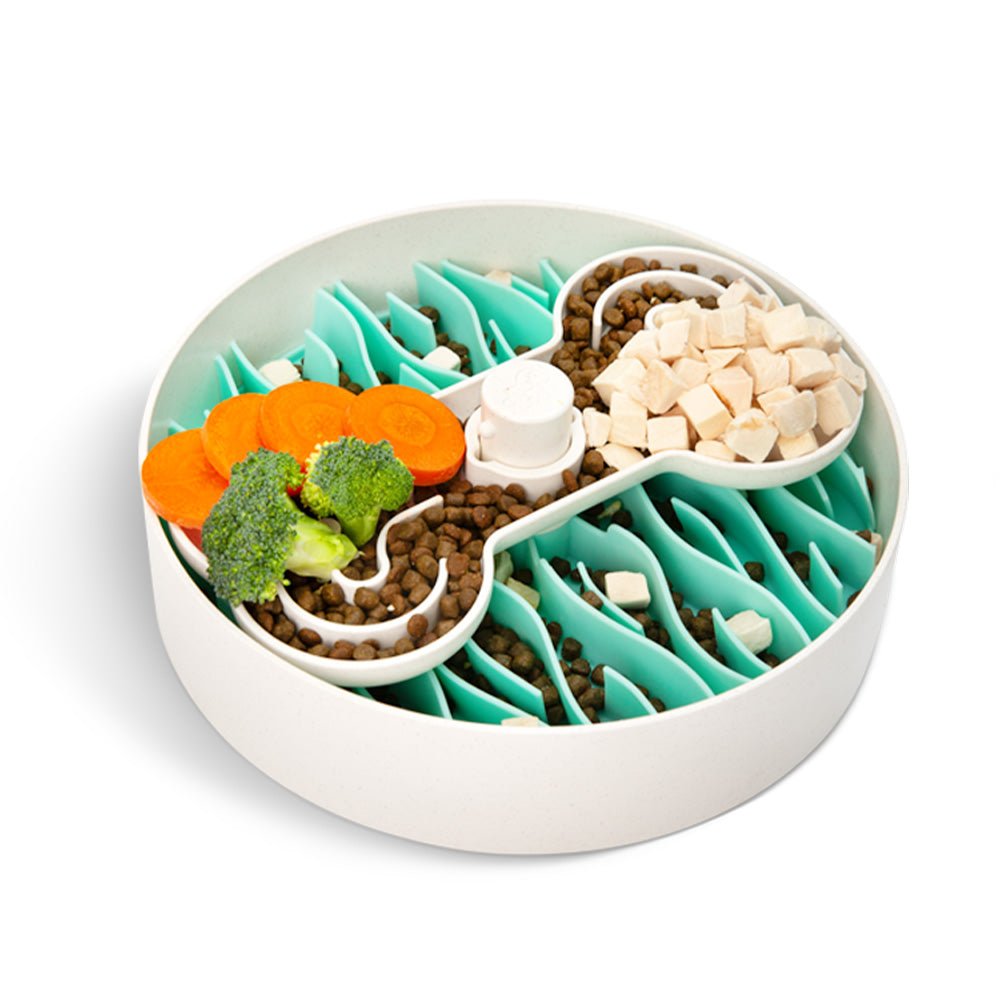
To clean a slow feeder dog bowl, scrape out leftovers, take the bowl apart, soak it for 5–10 minutes in hot soapy water, scrub the grooves with a small bottle brush, then rinse and air-dry it upside down. Rinse it right after wet or raw meals so food never dries in the ridges, and give it a deeper clean (dishwasher or a vinegar soak) once or twice a week.
Slow feeders work because of their ridges, mazes and grooves. The same shapes that slow your dog down also trap crumbs, gravy and saliva. The good news: with the right order of steps, cleaning one takes about two minutes.
How often should you clean a slow feeder?
Treat it like any food bowl you eat from yourself.
| What you feed | Quick clean | Deep clean |
|---|---|---|
| Dry kibble | Once a day (shake out crumbs, rinse, brush) | 1–2 times a week |
| Wet food or toppers | After every meal | 2–3 times a week |
| Raw food | Right after every meal, with hot soapy water | Every day or every other day |
| Frozen lick fillings (yogurt, pumpkin) | After every session | 2–3 times a week |
If the bowl ever feels slimy to the touch, that film is bacteria building up. It's your sign to do a deep clean straight away.
The 2-minute slow feeder clean-up (step by step)
- Scrape leftovers into the trash. A silicone spatula or spoon gets most food out of the grooves before any water touches it.
- Take it apart. If your slow feeder has removable inserts, separate every piece. Food hides where parts meet.
- Soak in hot soapy water for 5–10 minutes. This is the step most people skip, and it's the one that saves the most scrubbing. The soak softens dried food so it lifts out on its own.
- Brush the grooves. A small bottle brush or an old (dedicated) toothbrush reaches the bottom of narrow ridges better than a sponge.
- Rinse well. Run water through every channel until no soap is left. Dogs notice soap smells and may refuse the bowl.
- Air-dry upside down. Water pooling in grooves is where film starts. Let it dry fully before the next meal, or towel-dry it.
Can you put a slow feeder in the dishwasher?
Many can, but check the label. Hard plastic and plant-based bowls are often top-rack dishwasher safe; the bottom rack runs hotter and can warp them over time. Silicone lick mats usually go on the top rack too.
Before loading it, scrape off leftovers and give it a quick rinse. Dishwashers don't always reach the bottom of deep grooves when food has dried on.
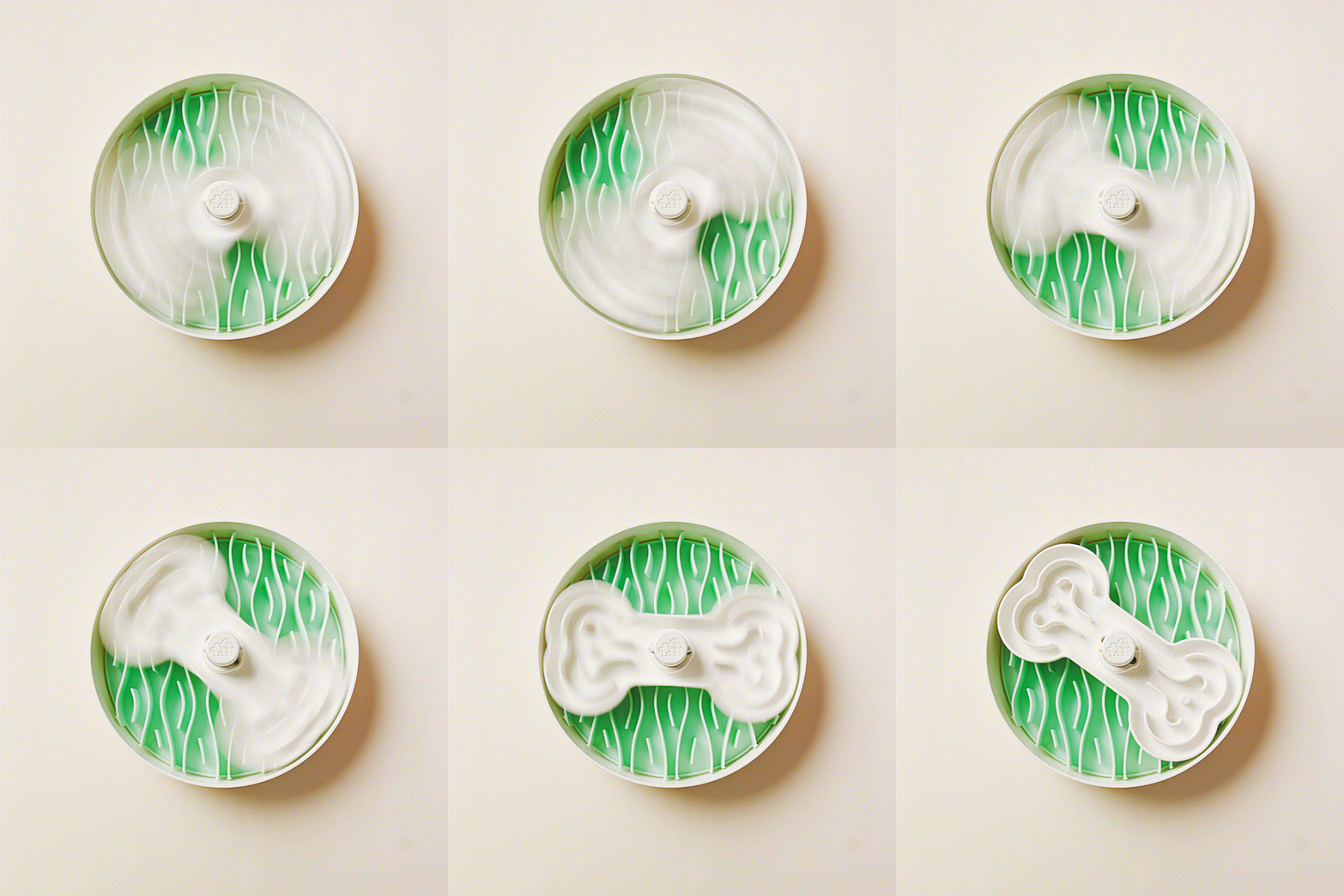
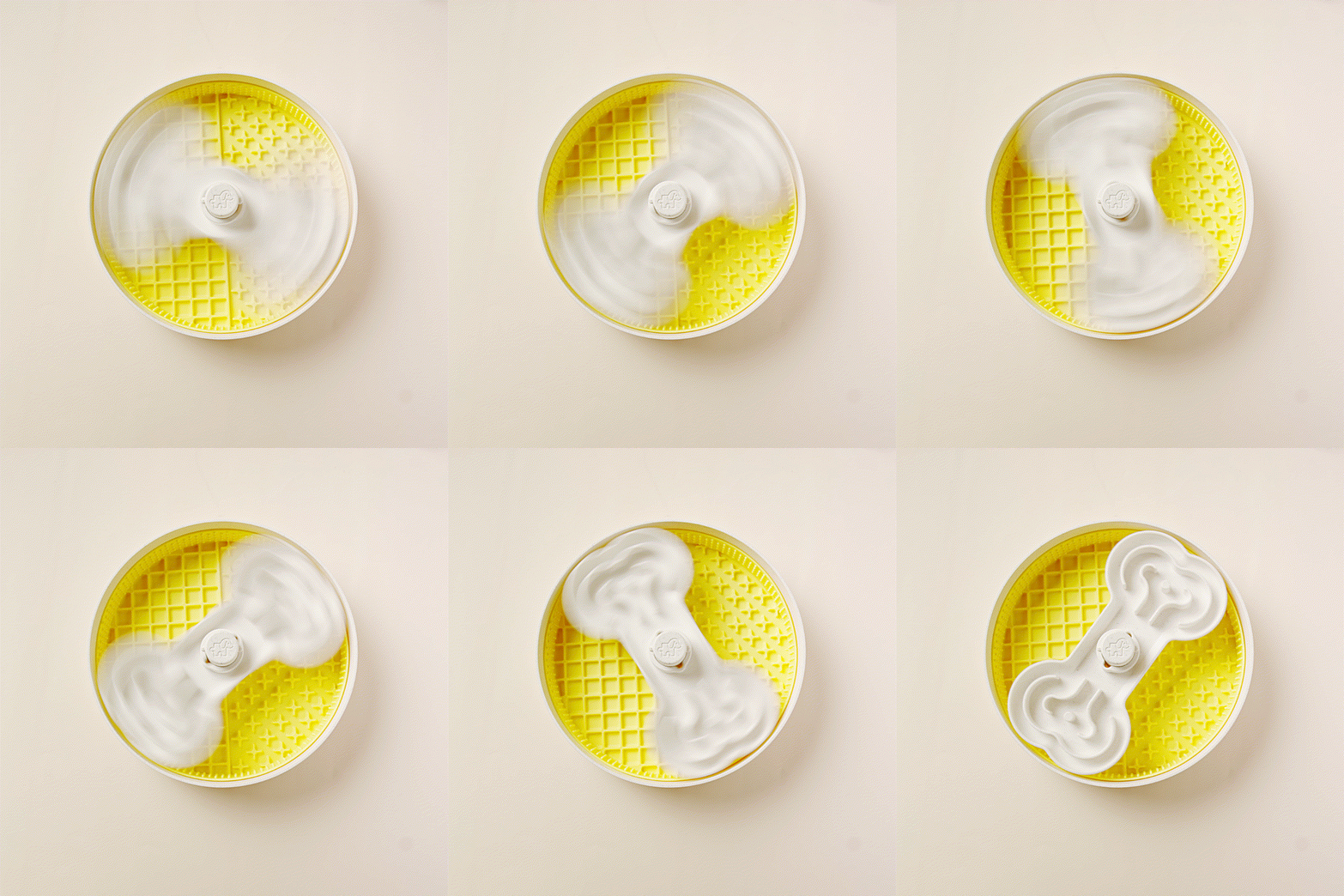
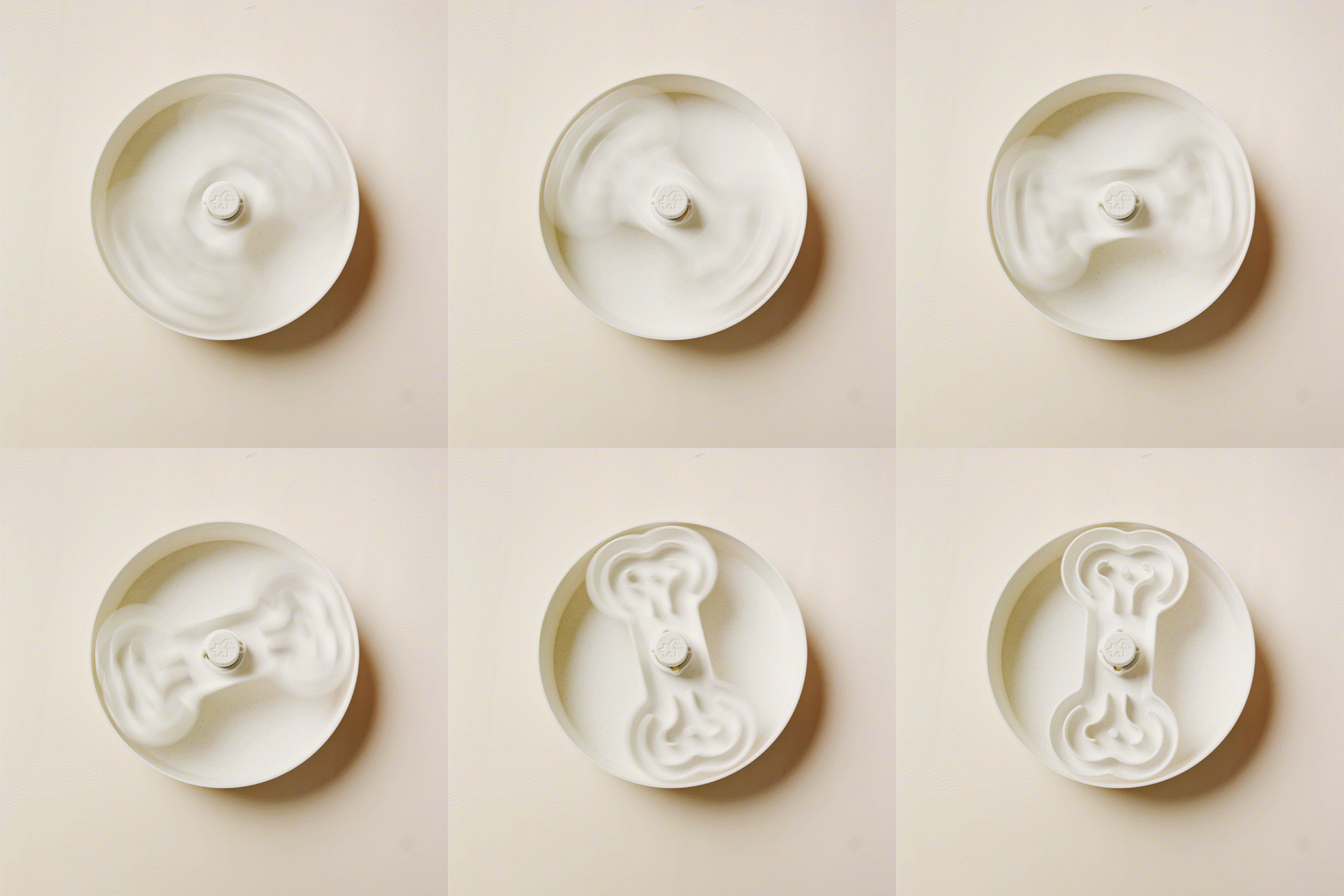
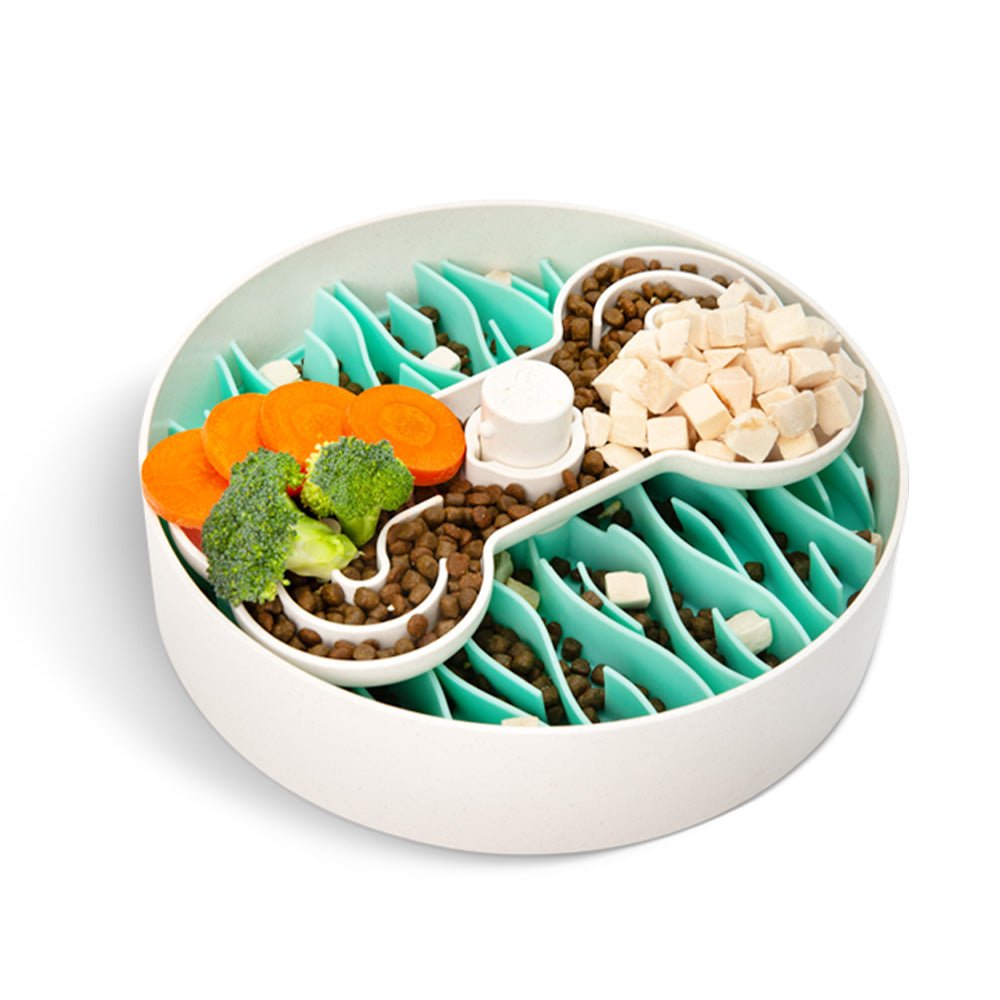
For example, the Puzzle Feeder Wave separates into 3 parts (bowl, slowing insert and bone plate), and each one is top-rack dishwasher safe, so nothing is left with food trapped underneath.
How do you get dried or stuck food out of the grooves?
- Soak longer. 15–20 minutes in hot soapy water loosens almost anything.
- Use a paste of baking soda and a little water on stubborn spots, then brush. It's gently abrasive and won't scratch most bowls.
- Skip steel wool and harsh scourers. Scratches create more places for bacteria to hide.
- Next time, rinse right away. Wet and raw food is easy to remove in the first 10 minutes and much harder after it dries.
How do you deep clean and get rid of slime and smells?
Once or twice a week (more for raw feeders):
- Wash the bowl as usual.
- Soak it for 10 minutes in a mix of 1 part white vinegar to 3 parts warm water.
- Brush the grooves, then rinse very well with clean water.
- Dry completely.
If you prefer a dishwasher, a hot top-rack cycle does a similar job for dishwasher-safe bowls. Avoid bleach unless it's very diluted and rinsed thoroughly, and never mix bleach with vinegar.
Cleaning tips by bowl type
- Maze and spiral bowls: follow the maze with the brush rather than scrubbing across it.
- Lick mats and lick bowls: soak face-down so fillings lift off the texture; a soft brush works better than a sponge.
- Snuffle mats: shake out crumbs daily and hand-wash or machine-wash on gentle according to the label, then air-dry fully.
- Modular feeders: always separate the parts. Most "my bowl smells" problems come from food stuck between pieces.
Signs it's time to replace a slow feeder
- Deep scratches or chew marks you can't clean
- Cracks or warping
- A smell that comes back right after washing
- Pieces that no longer fit together tightly
FAQ
Is it OK to rinse a slow feeder with just water?
A quick rinse helps between meals, but use hot soapy water at least once a day. Water alone doesn't remove the greasy film that food and saliva leave behind.
Why does my slow feeder smell even after washing?
Usually there's food or moisture trapped between parts or at the bottom of grooves. Take it fully apart, do a vinegar soak, and make sure it dries completely before reassembling.
Can I use dish soap on my dog's bowl?
Yes. Regular unscented dish soap is fine as long as you rinse it off thoroughly.
How do I keep raw food from sticking?
Rinse the bowl within a few minutes of the meal, then wash with hot soapy water. Freezing raw or wet food in the bowl before serving also makes leftovers easier to pop out.
Are slow feeders harder to clean than regular bowls?
They take a little longer because of the ridges. A bowl that comes apart into flat pieces, plus a 5-minute soak, makes the difference small.
Make clean-up easy from the start
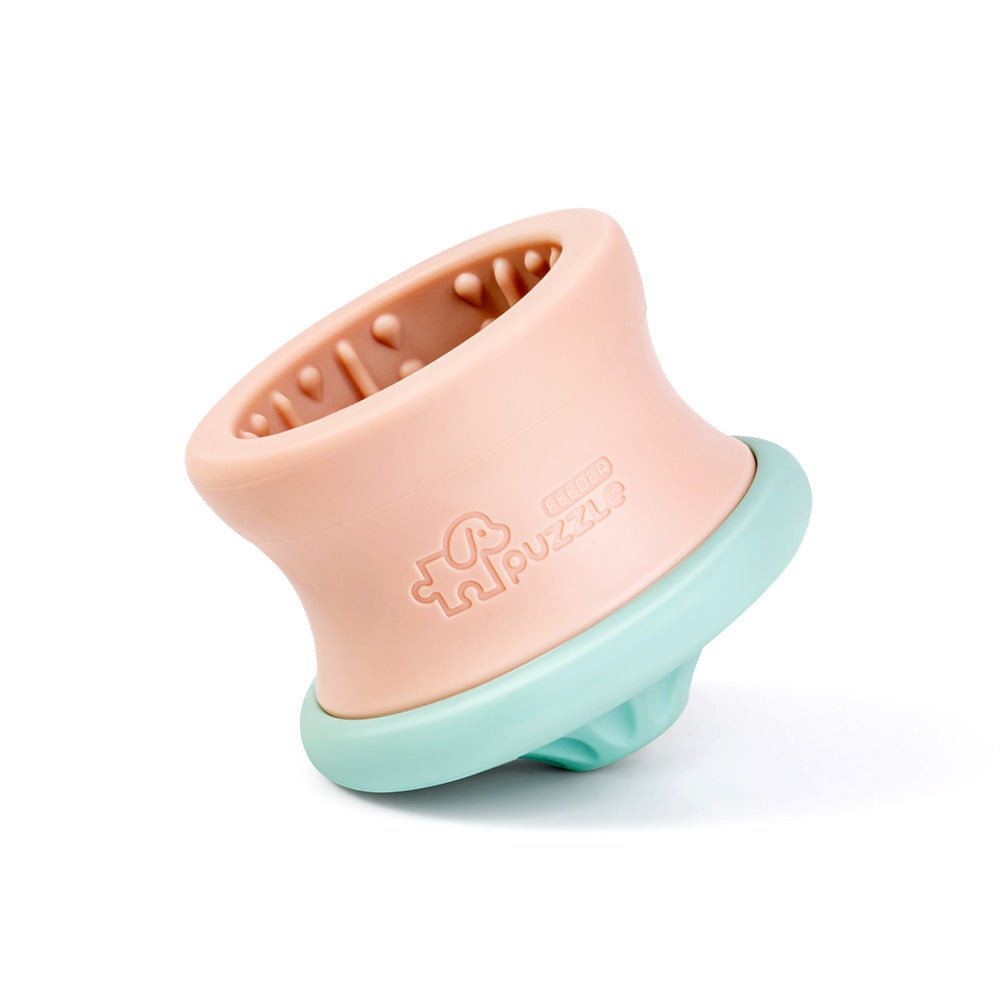
If scrubbing grooves is the reason you've avoided slow feeders, look for one that comes apart and goes in the dishwasher. The Puzzle Feeder Wave splits into 3 top-rack-safe parts, and the Puzzle Licker is made for frozen and spreadable fillings. Want more feeding tips? Read how to use wet food in a slow feeder.
Use code PZFDNEW10 for 10% off, plus free US shipping on orders over $40.
Not sure which bowl fits your dog? Take a look at our guide: Which Puzzle Feeder is right for my dog?

Leave a comment
All comments are moderated before being published.
This site is protected by hCaptcha and the hCaptcha Privacy Policy and Terms of Service apply.