

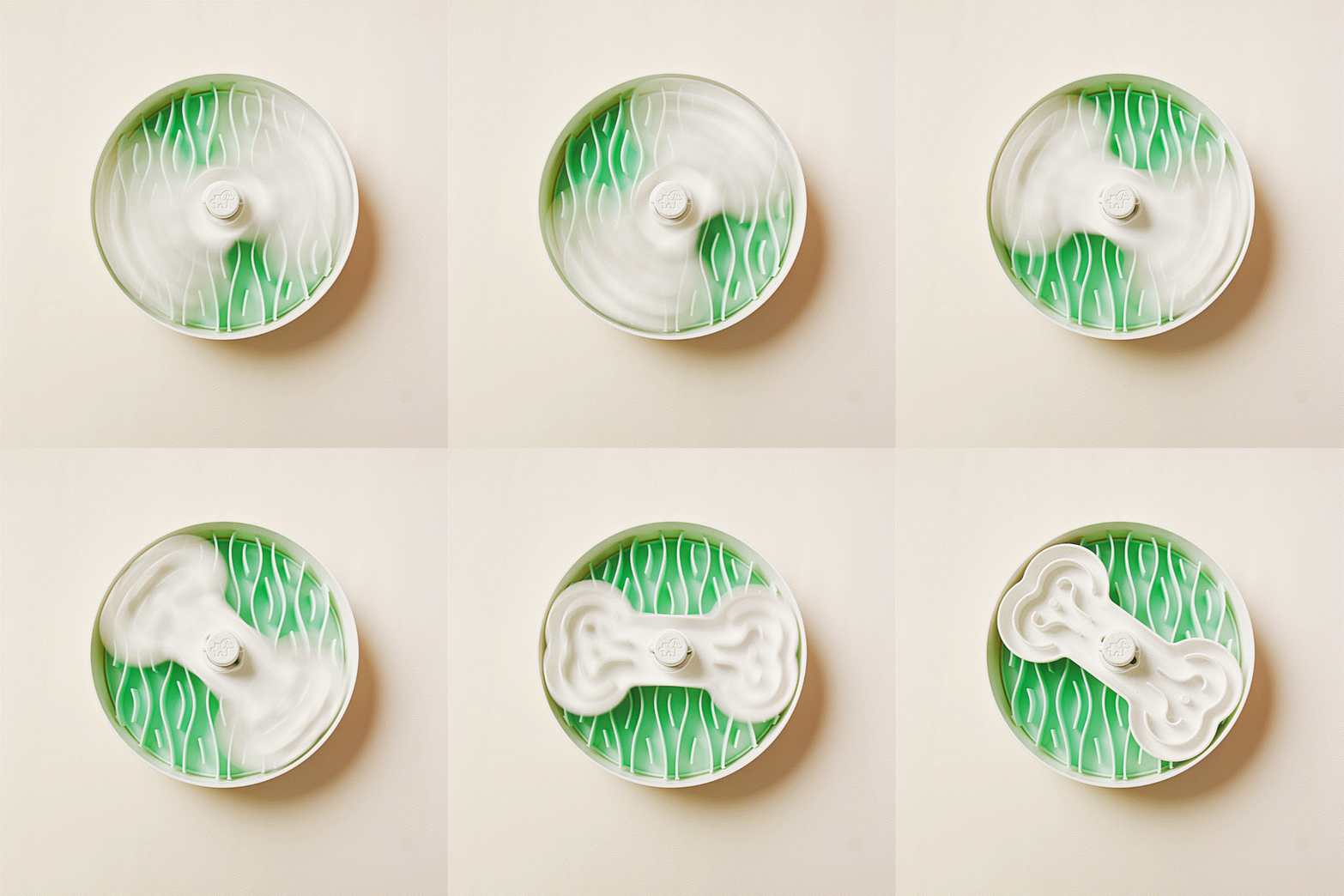
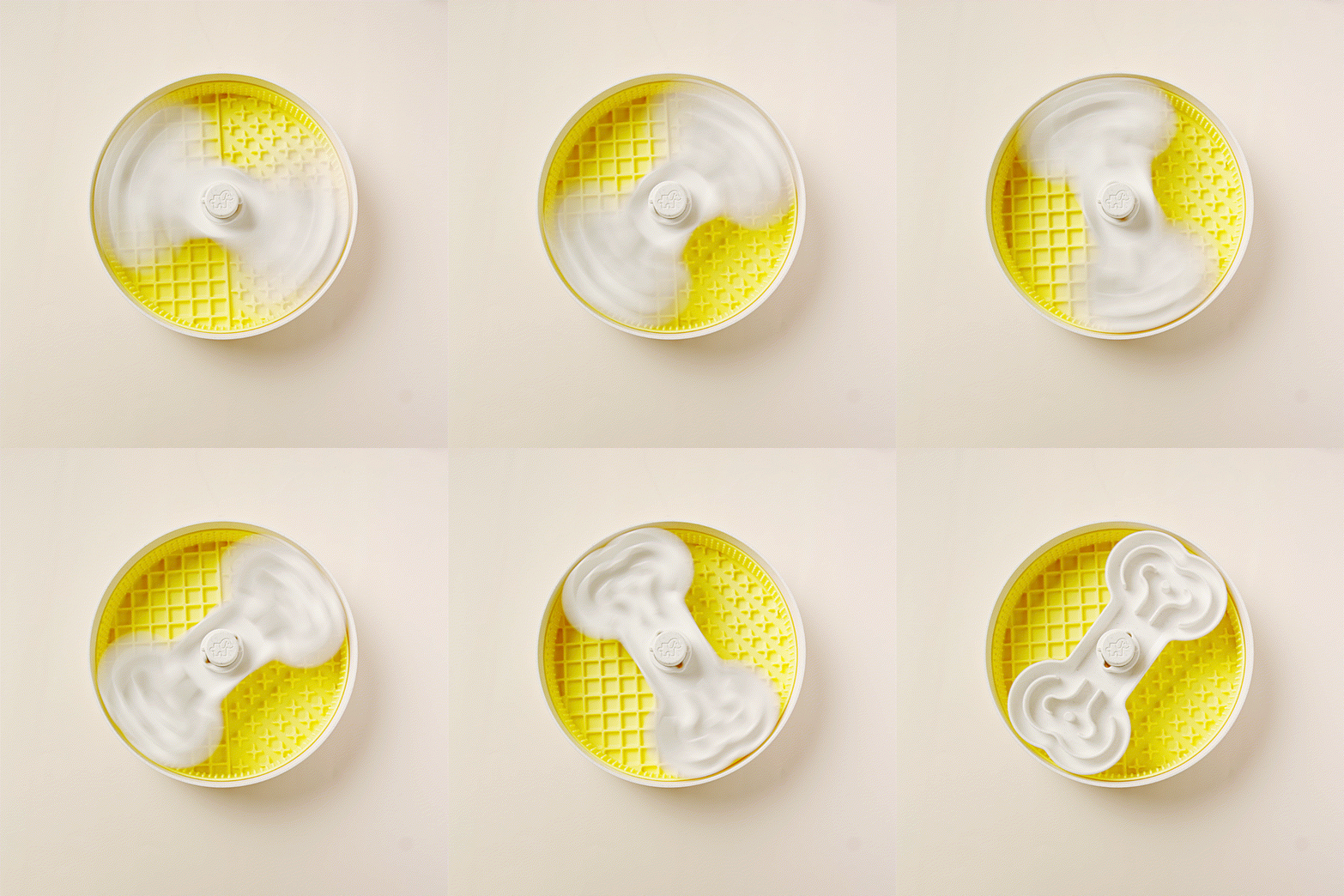
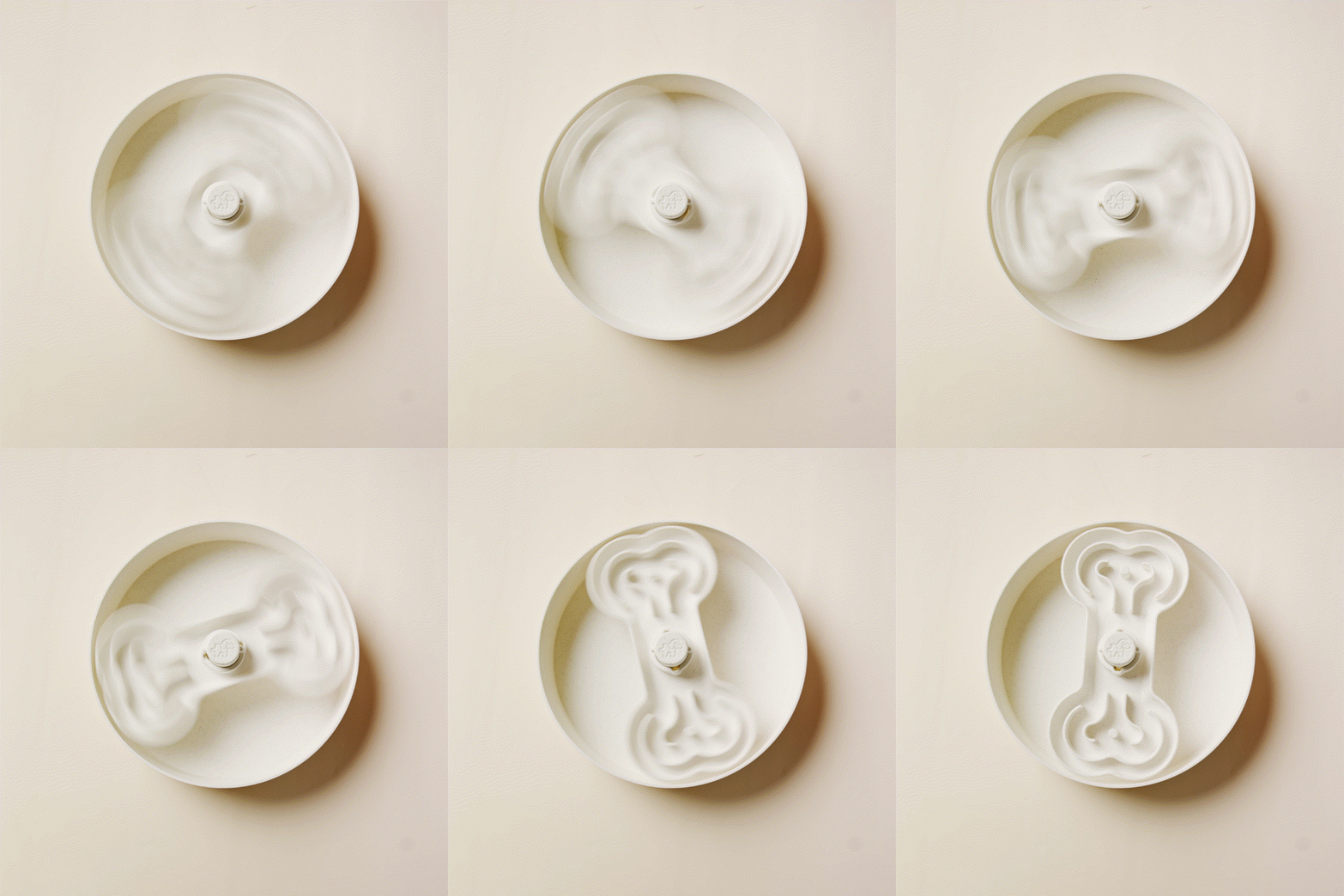
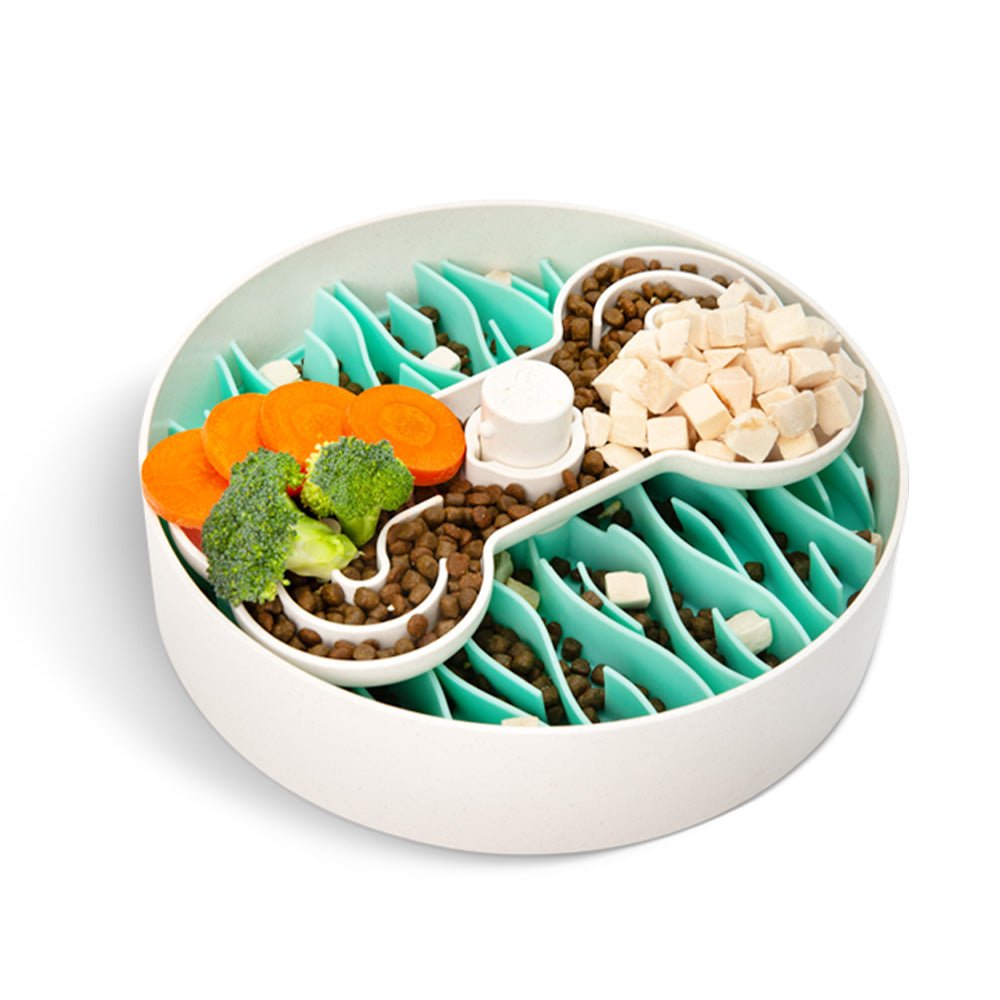
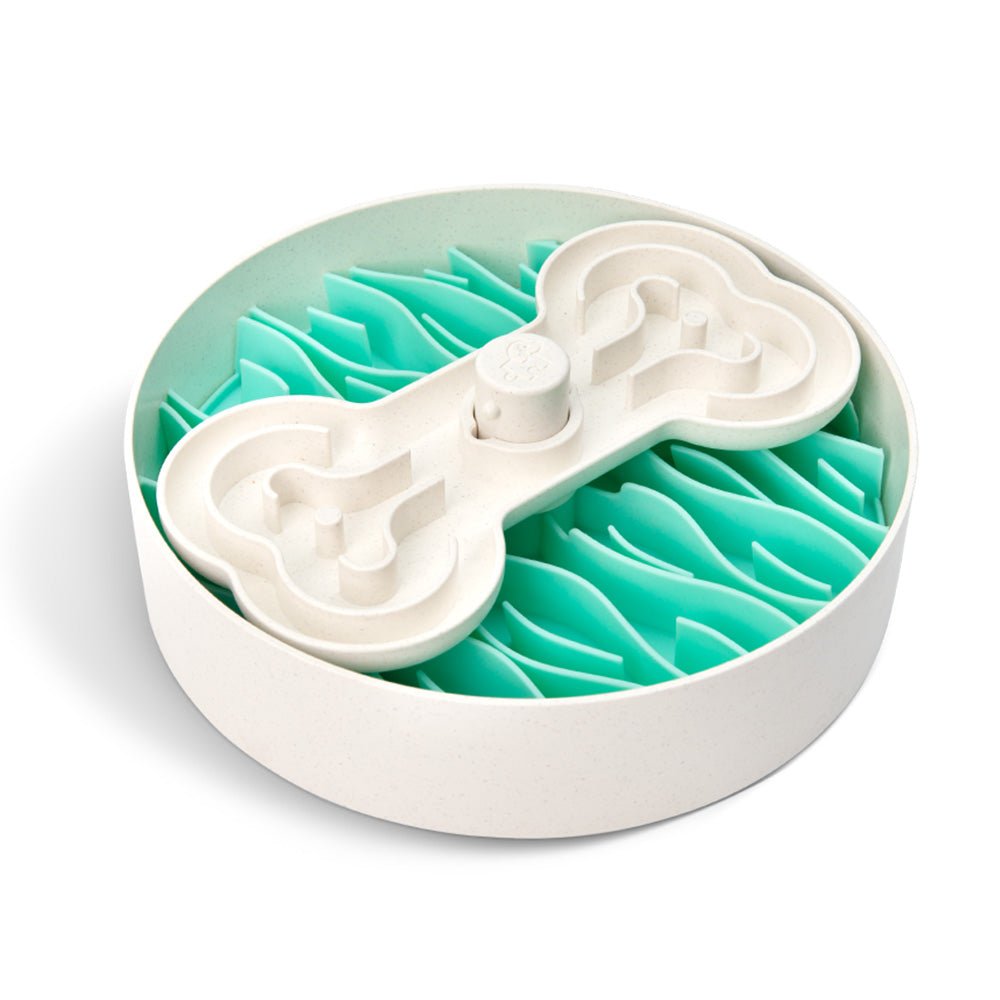
No slow feeder can promise to prevent bloat, and no bowl is a substitute for your vet's advice. What a slow feeder does is change how fast dinner goes in, and eating speed is one of several things vets mention when they talk about bloat risk. If your dog gulps food and you are worried, a bowl that makes dinner last longer is a sensible, low-risk thing to try, such as our Puzzle Feeder Wave, alongside a talk with your vet about your dog's own risk.
What is bloat in dogs?
Bloat is the everyday word for a stomach that fills with gas and swells. In its most serious form, called GDV (gastric dilatation-volvulus), the stomach can also twist. GDV is an emergency that needs a vet immediately. We are not vets, so this article sticks to practical feeding habits and when to pick up the phone. For the medical side, read our bloat symptoms guide and ask your own vet.
Do slow feeders help with bloat?
Here is the honest version. Gulping air along with food is one of the factors vets commonly mention, and a slow feeder makes a dog work for each mouthful, so the bowl empties more slowly. That is a reasonable thing to want for a fast eater. What nobody can honestly say is that a bowl prevents bloat. Risk also depends on things like breed, chest shape, age and family history, which is why your vet is the right person to ask.
So think of a slow feeder as one feeding habit among several, not as protection.
Why do some dogs gulp their food?
Plenty of dogs eat fast simply because they always have. Others race because another pet is nearby, because they are very hungry at dinner time, or because a new puppy never learned to slow down. Competition, excitement and habit are the usual suspects, and you can often spot them: the dog is done before you have put the bag away, the bowl gets licked across the floor, and there is a lot of swallowing with very little chewing. If that sounds familiar, timing dinner for a few nights gives you something concrete to tell your vet, such as 'the bowl is empty in 40 seconds.'
Who should ask their vet first?
Ask your vet about bloat risk if your dog:
- is a large or deep-chested breed
- gulps food or water very fast
- has a relative that has had bloat
- has had stomach trouble after meals before
Small dogs gulp too, but your vet can tell you what matters for your dog's breed and size.
Everyday feeding habits many owners use
- Time dinner tonight. If the bowl is empty in under a minute, you have your starting point. Our stopwatch test shows how.
- Split the meal. Two or three smaller meals instead of one big one, if your vet is happy with that.
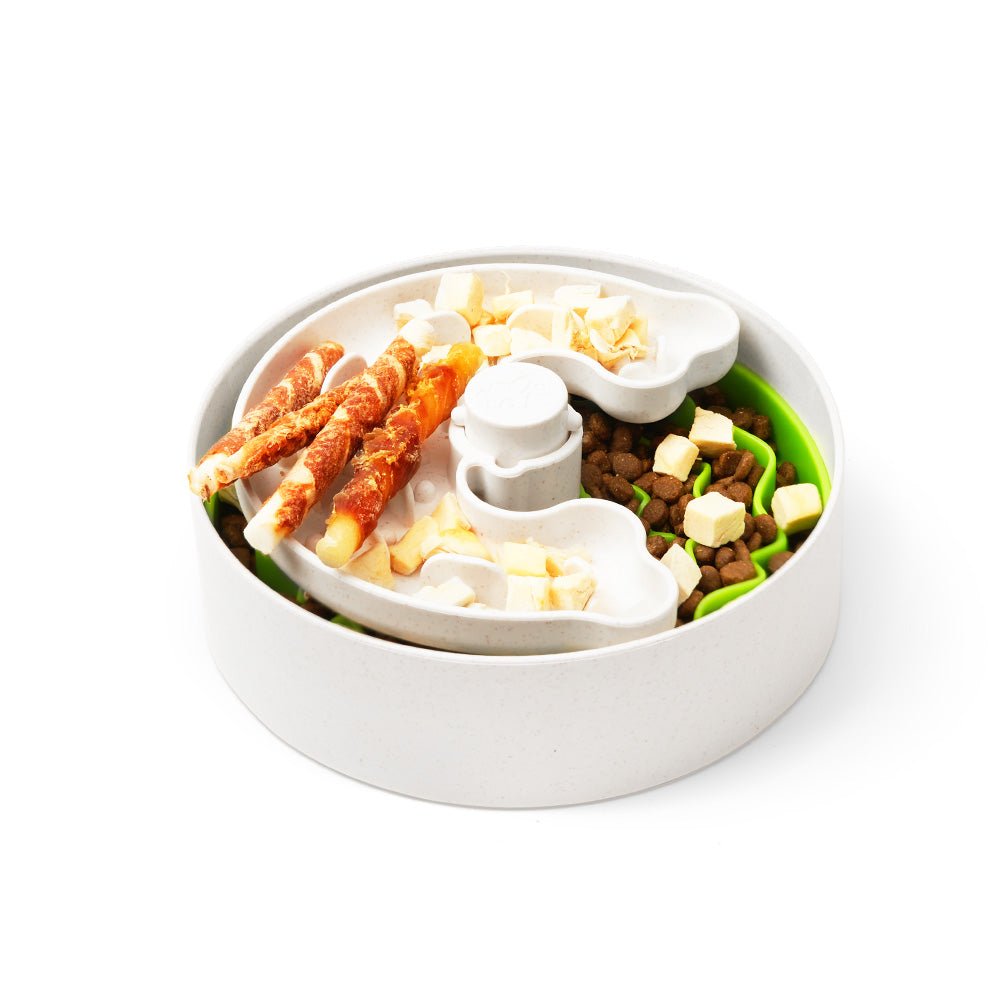
- Use a slow feeder. The Wave comes apart in 3 parts, has 4 modes so you can make it harder when your dog gets clever, and goes on the top rack of the dishwasher. The Swirl uses a spiral maze if your dog prefers to chase food around the bowl.
- Small dog? The Junior is made for small and medium dogs.
- Keep dinner calm. Feed in a quiet spot, away from other pets, so nobody is racing. Our guide on dogs eating each other's food helps in multi-dog homes.
- Ask your vet about exercise timing around meals, since many vets have a view on this for deep-chested breeds.
Slow feeder checklist
| Question | What to look for |
|---|---|
| Does my dog gulp? | Empty bowl in seconds, little chewing |
| Is the bowl the right size? | Matches your dog's mouth and meal size |
| Can I clean it easily? | Comes apart, dishwasher safe |
| Will my dog get bored of it? | Adjustable difficulty |
| Have I asked my vet? | Especially for large or deep-chested dogs |
When to call your vet right away
Do not wait and see. Call your vet or an emergency clinic straight away if your dog has a swollen or hard belly, is retching without bringing anything up, is restless or pacing, drools heavily, or seems to be in pain. These can be signs of an emergency. A slow feeder does not change that rule.
FAQ
Can a slow feeder prevent bloat?
No bowl can promise that. A slow feeder slows how fast food goes in, which is one of the habits owners and vets talk about. Your vet can tell you what applies to your dog.
My dog eats fast and then throws up. Is that bloat?
Not necessarily, but do not guess. Read why dogs throw up after eating and ask your vet, especially if it happens often.
Is a slow feeder good for large dogs?
Many owners of larger dogs use one for fast eaters. Pick a bowl that holds a full meal, and check with your vet about your dog's breed.
How long should dinner take?
There is no magic number, but many owners aim for a few minutes instead of seconds. Time it and see where your dog starts.
Will my dog figure the feeder out?
Some do. That is why adjustable modes help, and why our guide on making a slow feeder harder exists.
Ready to try one?
Use code PZFDNEW10 for 10% off Shop All, and it combines with free shipping. Not sure which bowl fits your dog? Start with the size guide.
This article is general feeding information, not veterinary advice. If you are worried about your dog's health, ask your vet.

Leave a comment
All comments are moderated before being published.
This site is protected by hCaptcha and the hCaptcha Privacy Policy and Terms of Service apply.