


Most dogs that won't eat from a slow feeder aren't being picky. The puzzle is simply too hard, too new or not worth the effort yet. Start on the easiest setting, make the first few meals a quick win with a few tasty toppers, and build up the difficulty over one to two weeks. If your dog also skips meals from a regular bowl, check in with your vet.
Plenty of dogs in our community walked away from their first puzzle dinner. A few weeks later they were sniffing, nudging and licking their way through every meal. Here's how to get from "nope" to "this is my favorite game".
Why does my dog ignore the slow feeder?
When a dog stares at the bowl, paws at it once and walks off, it usually comes down to one of these reasons:
- The setting is too hard. Deep ridges or a tight maze can feel impossible to a dog that has only ever eaten from a flat bowl.
- It's new and strange. Some dogs are wary of new objects, especially ones that move or make noise on the floor.
- The reward isn't worth it. Plain dry kibble might not be motivating enough to keep working for it.
- Frustration. If the first try was a struggle, your dog may have learned that the bowl equals "no food".
- Bad timing. A dog that isn't hungry, is stressed or was just fed treats won't bother with a puzzle.
- Size or face shape. Small mouths and flat faces can struggle with deep, narrow channels.
How do I get my dog to use a slow feeder?
Think of it as teaching a new game. The goal for the first week is easy success, not a long meal.
- Start on the easiest setting. If your feeder has modes or inserts, use the shallowest one first.
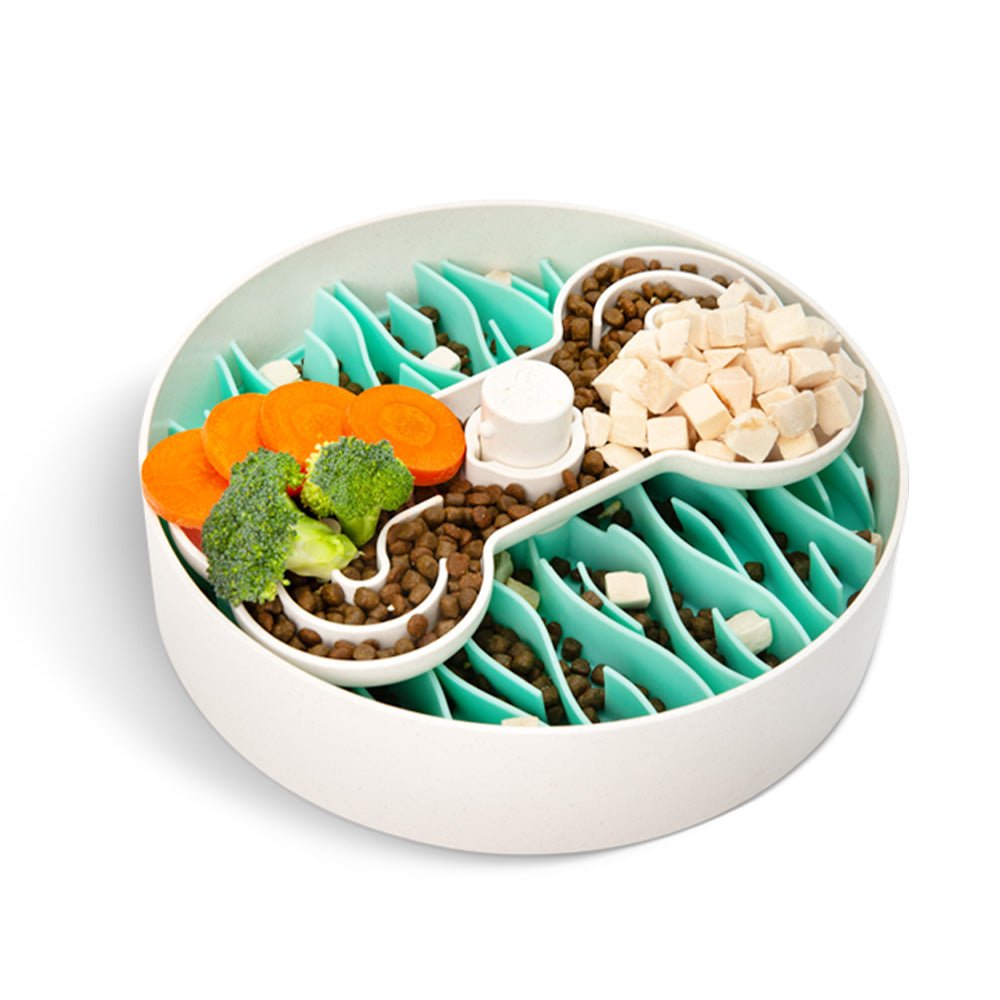
- Make it smell amazing. Scatter a few high-value treats on top, or smear a thin layer of wet food or plain pumpkin in the grooves.
- Use part of the meal, not all of it. Put a small portion in the slow feeder and the rest in the old bowl, then shift the ratio over a few days.
- Stay close and keep it calm. Sit nearby, praise every sniff and lick, and don't push your dog's nose into the bowl.
- Stabilize it. Put the feeder on a non-slip mat or against a wall so it doesn't slide away.
- Level up slowly. Once your dog finishes easily for a few days in a row, move to the next difficulty.
What if my dog gets frustrated?
Signs of frustration include barking at the bowl, flipping it, chewing the edges or giving up after a few seconds. When you see these, step back one level of difficulty and add something tastier. Short sessions that end in success build confidence much faster than long struggles.
Some dogs simply prefer a different style of eating. Lickers often do better with a lick bowl like the Puzzle Licker, while sniffers may love a snuffle mat where kibble hides between soft leaves.
Quick troubleshooting table
| What you see | Likely cause | Try this |
|---|---|---|
| Sniffs, then walks away | Too hard or not tasty enough | Easiest setting + a few toppers on top |
| Won't go near the bowl | New-object wariness | Leave it out empty for a day, drop treats near it |
| Bowl slides across the floor | Not stable | Non-slip mat or place it in a corner |
| Barks, paws or flips it | Frustration | Drop one level, shorter sessions |
| Eats some, leaves the rest | Small mouth or deep grooves | Smaller feeder or shallower insert |
| Skips meals from any bowl | Not about the feeder | Talk to your vet |
Which slow feeder is easiest for beginners?
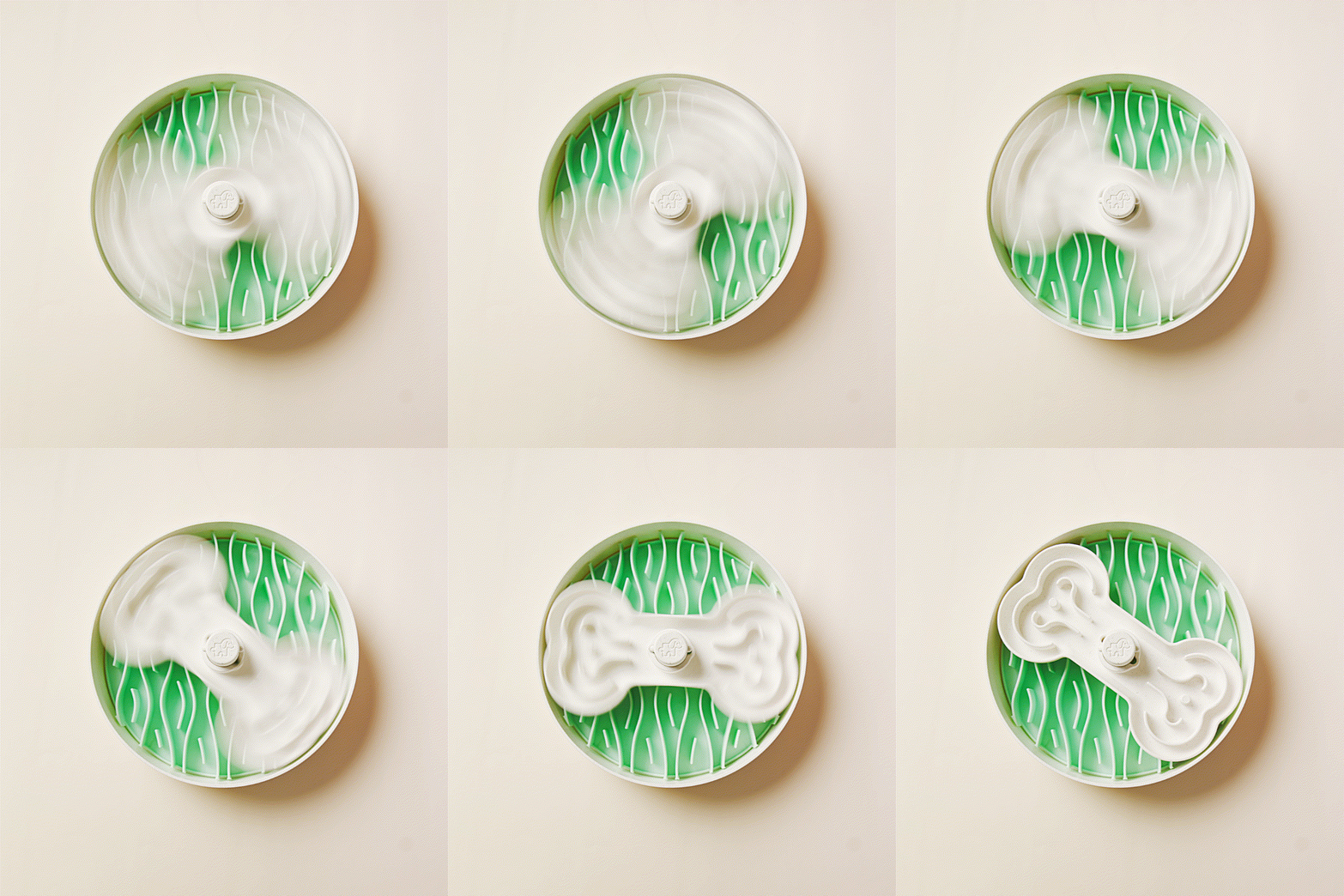
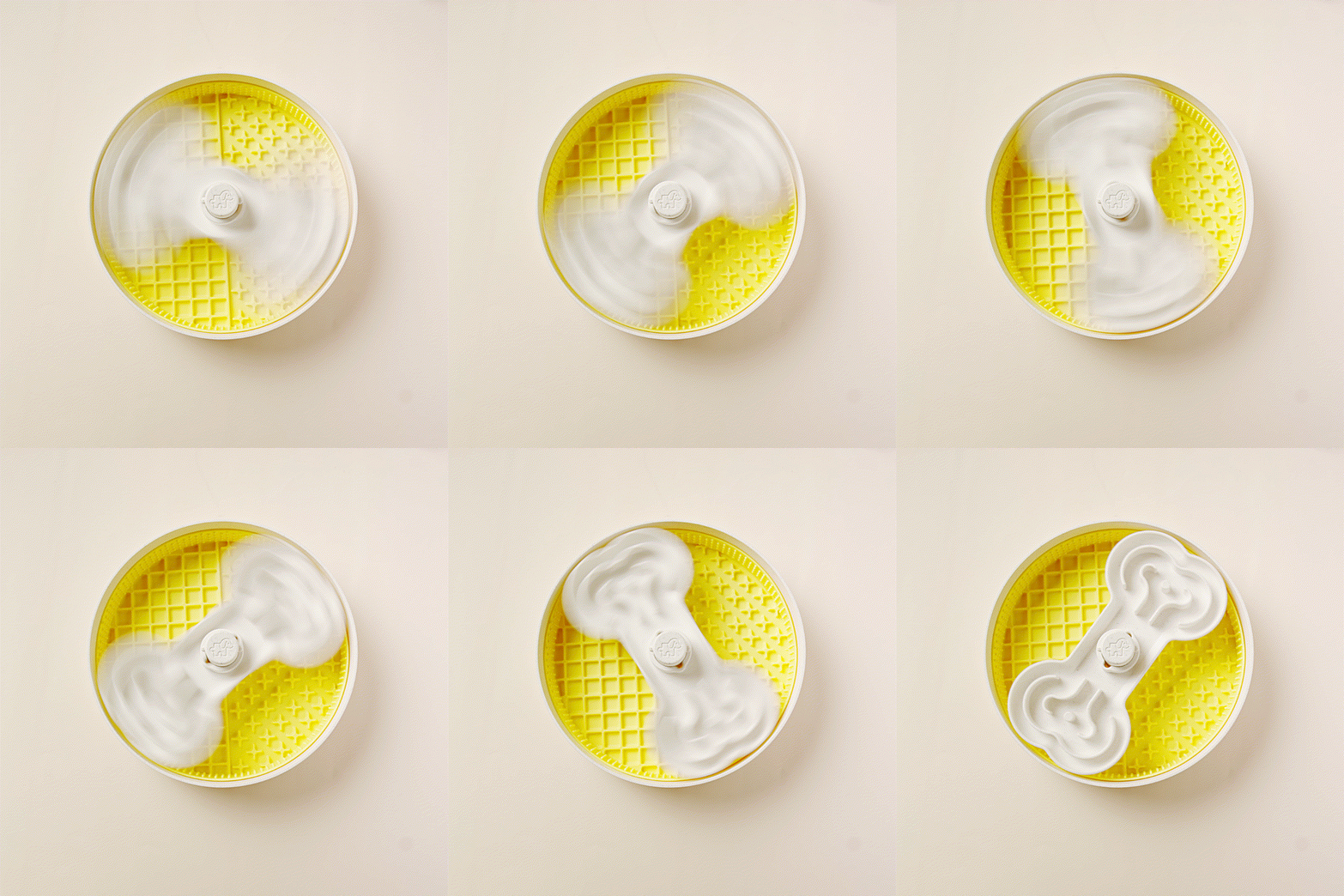
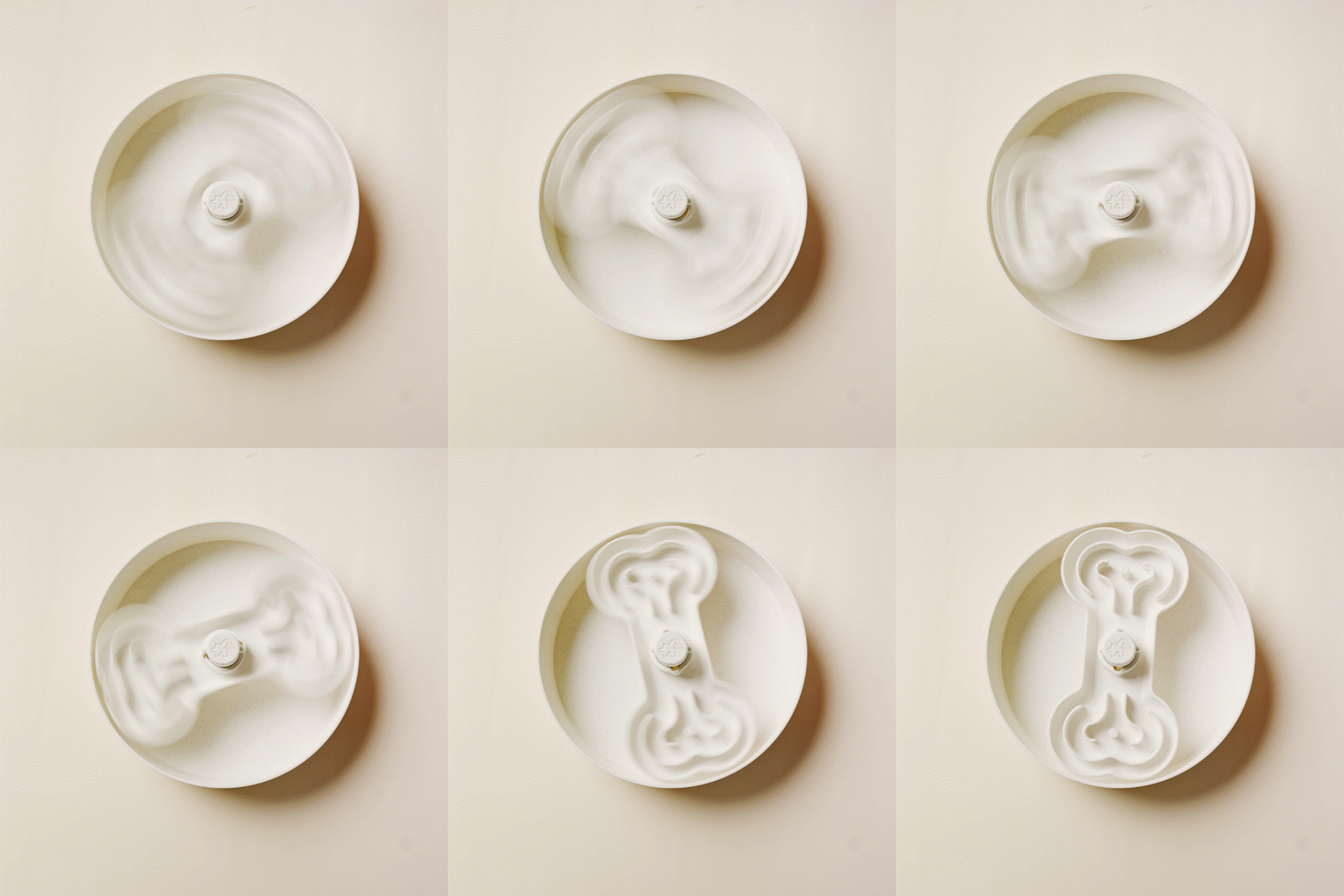
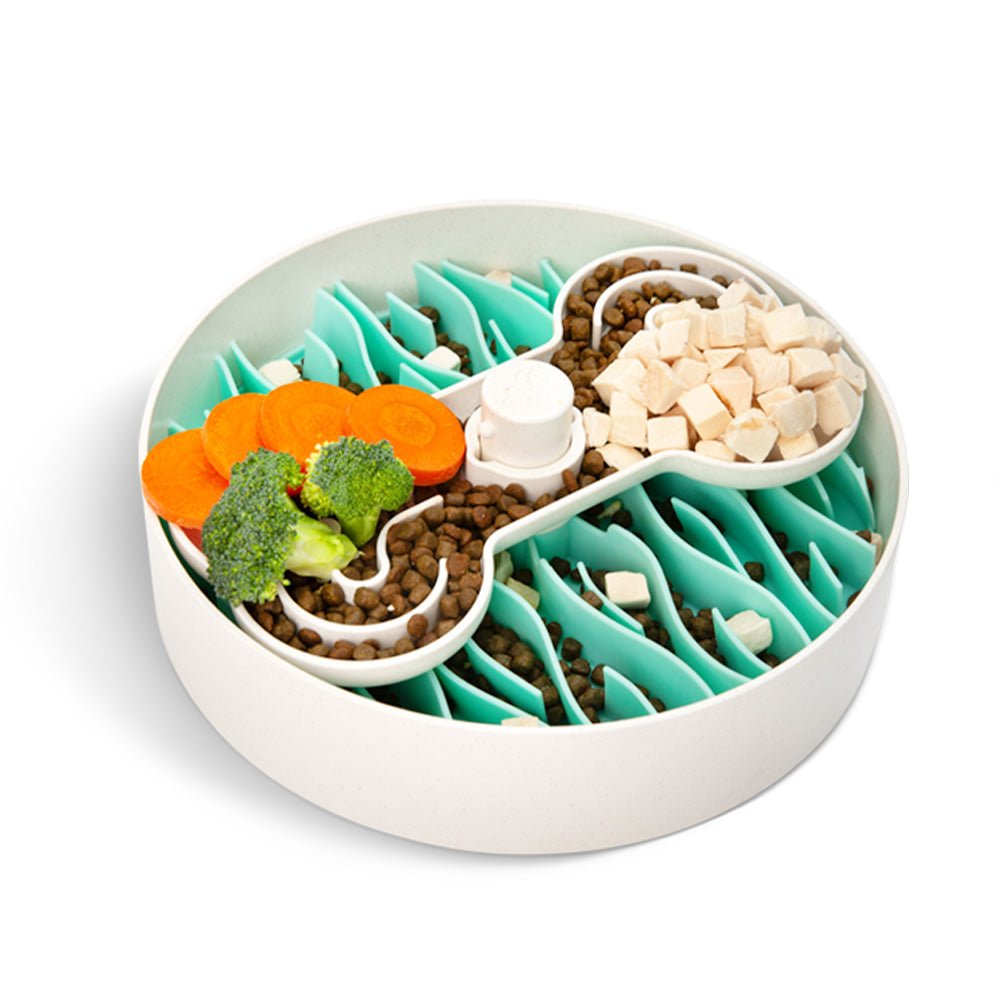
A feeder with adjustable difficulty makes the learning curve much smoother. The Puzzle Feeder Wave has 3 modular parts that combine into 4 modes, so you can start with an easy layout and add challenge as your dog gets the hang of it. It works with kibble, wet and raw food. For small breeds and puppies, the Puzzle Feeder Junior is sized for smaller mouths.
How long does it take a dog to get used to a slow feeder?
It varies a lot from dog to dog. Confident, food-motivated dogs may figure it out in one meal. Cautious or older dogs can need one to two weeks of easy, positive sessions. Keep a short note of how long each meal takes. Seeing the time stretch out a little each day is a good sign that your dog is learning.
FAQ
Is it OK if my dog takes a long time to eat from a slow feeder?
Yes, that's the point. A longer, calmer meal is the goal, as long as your dog is finishing the food and not getting frustrated.
Should I take the slow feeder away if my dog won't eat?
Don't let your dog go hungry over it. Offer the meal in a regular bowl, then try the slow feeder again with a smaller portion and an easier setting at the next meal.
Can I put treats or wet food in to encourage my dog?
Yes. A few treats on top or a thin layer of wet food in the grooves is one of the fastest ways to make the bowl interesting. Count extras as part of the daily food amount.
My dog used to like the slow feeder and suddenly stopped. Why?
Check the bowl for dried food or a smell, since grooves can trap residue. See our guide on how to clean a slow feeder. If your dog is also off food in general, ask your vet.
The bottom line
A dog that won't eat from a slow feeder usually needs an easier start, a tastier reward and a little patience. Make the first meals easy wins, level up slowly, and most dogs come to love their puzzle dinner. New to PuzzleFeeder? Use code PZFDNEW10 for 10% off the Shop All collection, plus free US shipping on orders over $40 (Canada $60+ CAD).
Not sure which feeder fits your dog's size and eating style? Take a look at our guide: Which Puzzle Feeder is right for my dog?

Dejar un comentario
Todos los comentarios se revisan antes de su publicación.
Este sitio está protegido por hCaptcha y se aplican la Política de privacidad de hCaptcha y los Términos del servicio.