


How to Choose the Right Puzzle Toy for Your Dog
|
|
Tempo de leitura 3 min
|
|
Tempo de leitura 3 min
Dogs are intelligent animals that need mental stimulation just as much as physical exercise. Without it, they can become bored, anxious, or destructive. Puzzle feeders and enrichment toys are one of the best ways to keep your pup engaged, slow down fast eaters, and build confidence through problem-solving.

Puzzle toys come in different difficulty levels — from beginner to advanced. If your dog is new to enrichment toys, start with a simple lick mat or a basic slow feeder bowl. As they get the hang of it, you can graduate to more complex puzzle feeders with sliding compartments and hidden treats.
A toy designed for a Chihuahua won't challenge a Border Collie — and vice versa. Make sure the puzzle toy is appropriately sized for your dog's snout and paws. Herding and working breeds tend to need more complex challenges, while smaller or senior dogs may prefer gentler options.

Are you trying to slow down a dog that gulps their food? Or are you looking for a way to keep them busy while you work from home? Different puzzle feeders serve different purposes:
Always look for BPA-free, food-safe materials. Silicone and ABS plastic are popular choices that are easy to clean and long-lasting. Avoid toys with small parts that could be chewed off and swallowed.

Even the best puzzle toy loses its novelty over time. Rotate between 2–3 different feeders to keep your dog mentally engaged and excited at mealtime.
Yes! Puzzle feeders benefit dogs of all ages, sizes, and breeds. Puppies develop problem-solving skills, adult dogs stay mentally sharp, and senior dogs get gentle cognitive stimulation. Just choose the right difficulty level for your dog's experience.
Most dogs do well with 1–2 puzzle feeding sessions per day — typically at regular mealtimes. Each session usually lasts 10–20 minutes depending on the complexity of the feeder. Always supervise your dog, especially when introducing a new toy.
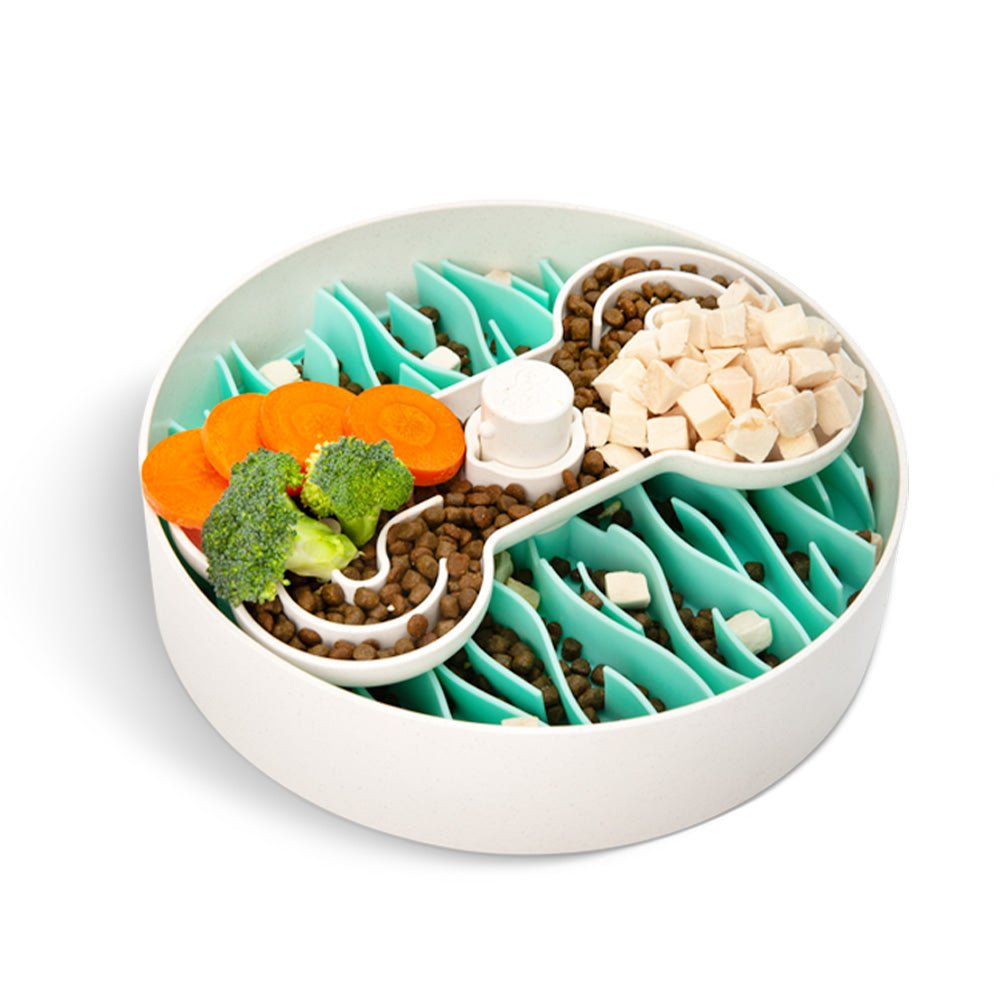
You can use dry kibble, wet food, peanut butter (xylitol-free), plain Greek yogurt, pumpkin puree, or a mix of all of the above. Frozen fillings make the challenge last even longer and are great for hot days!

Absolutely. The repetitive licking and sniffing involved in using a puzzle feeder triggers the release of calming hormones in dogs. Many pet owners use lick mats and slow feeders to help dogs relax during thunderstorms, fireworks, or when left alone.
Most puzzle feeders are dishwasher-safe on the top rack. For hand washing, use warm soapy water and a bottle brush to reach into grooves and crevices. Always let it dry completely before the next use to prevent mold or bacteria buildup.
Start easier! If your dog gives up quickly, the feeder may be too difficult. Begin with a flat lick mat or a wide-groove slow feeder, then gradually introduce more complex designs as their confidence grows. You can also make it easier by using wet food or peanut butter instead of dry kibble.
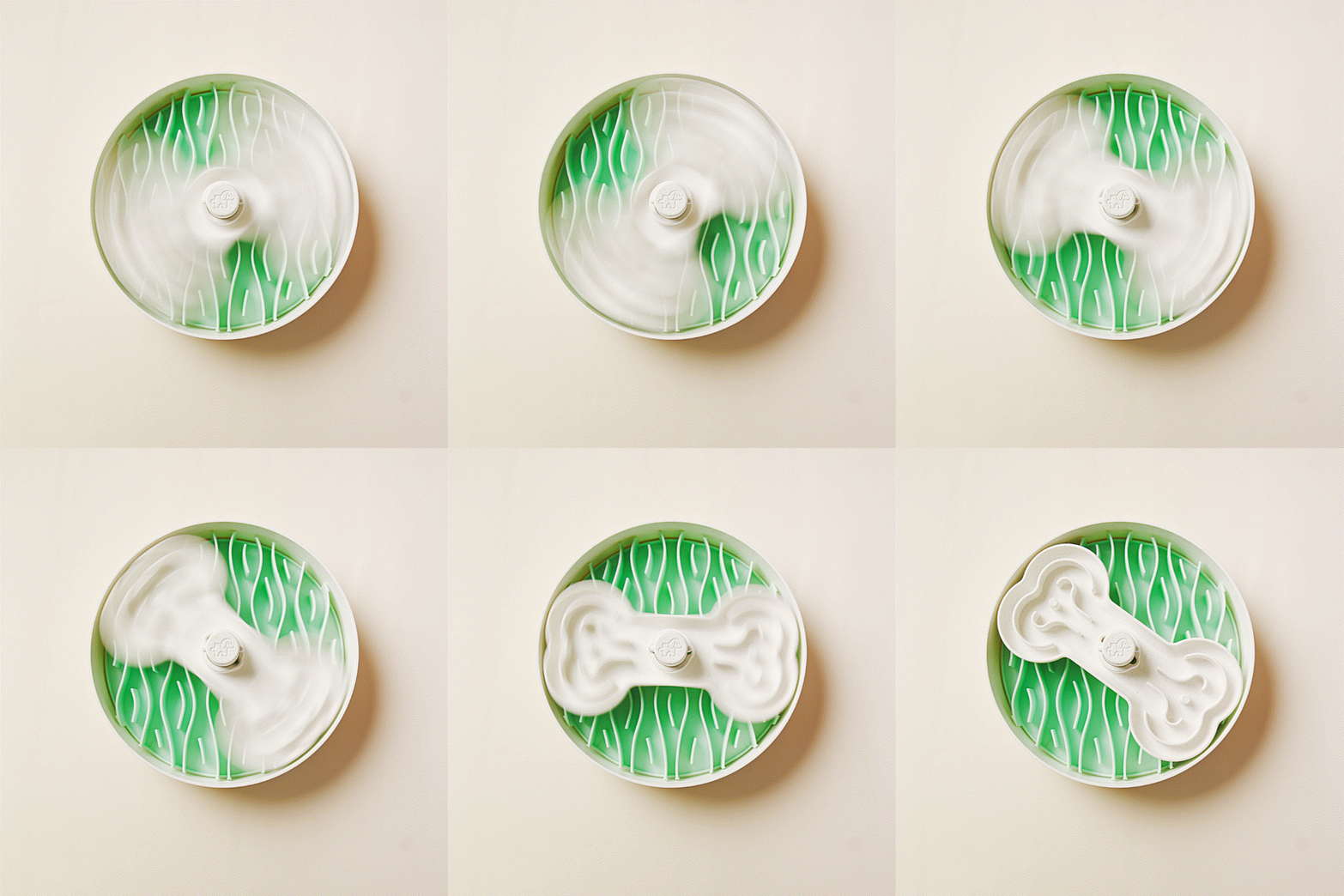
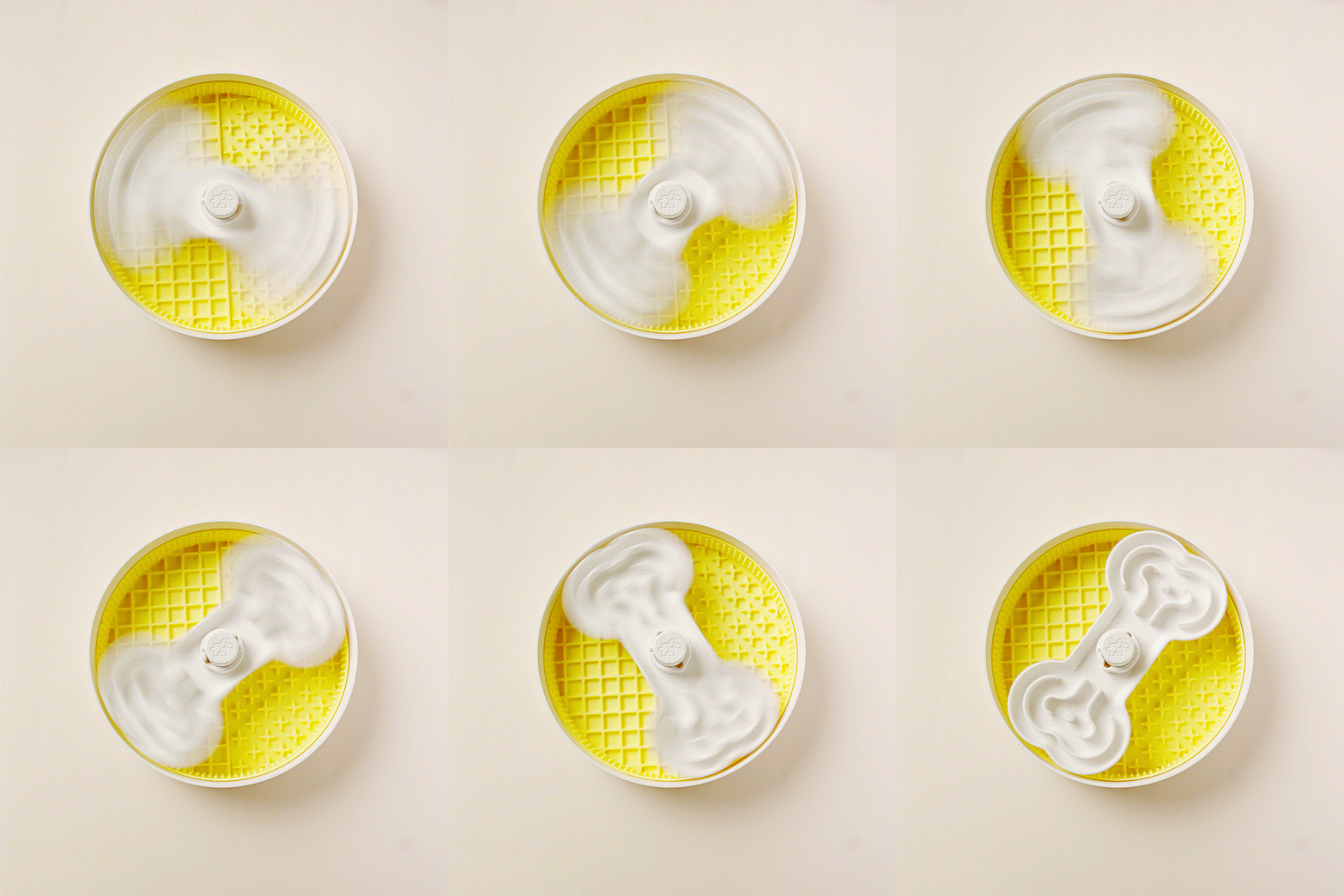
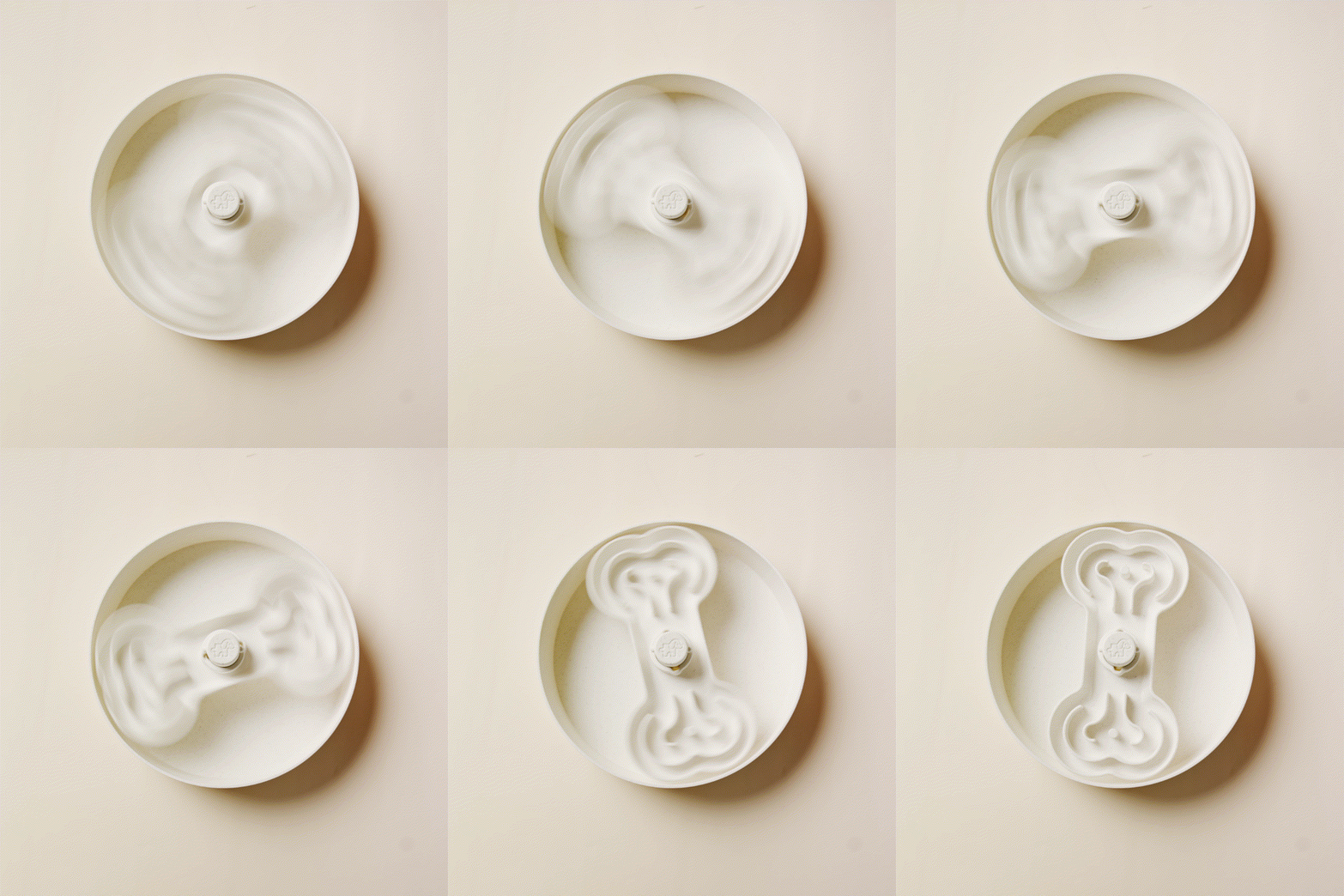
A slow feeder is designed primarily to extend mealtime and prevent bloat by making dogs eat more slowly. A puzzle feeder adds an extra layer of mental challenge — dogs must figure out how to access the food. Many products combine both functions, like our PuzzleFeeder™ designs.

Puppies as young as 8 weeks can start with very simple lick mats. Introduce puzzle feeders gradually as they grow. By 4–6 months, most puppies are ready for beginner-level puzzle feeders. Always choose age-appropriate difficulty and supervise young pups.
Yes — many veterinarians and animal behaviorists recommend puzzle feeders as part of a dog's daily enrichment routine. They help prevent obesity by slowing eating, reduce boredom-related behaviors, and support overall mental health.
At PuzzleFeeder™, we design enrichment feeders that are slower than a slow feeder — because we believe every dog deserves a meal that's also a mental workout. Browse our collection to find the perfect match for your pup.


