


To make a slow feeder harder, add one new obstacle at a time: switch to a tighter pattern or an extra insert, soak or freeze the food so it sticks in the grooves, split the meal across two puzzles, or move to a bowl with more levels. Raise the difficulty only after your dog finishes the current setup calmly, and step back if they start to give up or get frustrated.
Plenty of dogs "solve" their first slow feeder within a week or two. If your dog is back to finishing dinner in under a minute, the bowl isn't broken. Your dog just got good at it. Here's how to level it up without turning mealtime into a fight.
How do I know my dog is ready for a harder slow feeder?
Run a quick stopwatch test. Time two or three normal meals in the current setup and watch how your dog eats, not just how fast.
- Ready to level up: the meal goes quickly, your dog stays relaxed, and they clear every groove without pawing, flipping or walking away.
- Stay where you are: the meal takes a few minutes and your dog is still working at it with interest.
- Make it easier: your dog whines, barks at the bowl, tries to flip it or leaves food behind. (Our guide on why some dogs won't eat from a slow feeder covers this.)
Not sure what "fast" looks like for your dog? See how long it should take a dog to eat.
What are the easiest ways to make a slow feeder harder?
Try these roughly in order, one change at a time. Give each change a few meals before you add another.
1. Add an insert or switch to a harder mode
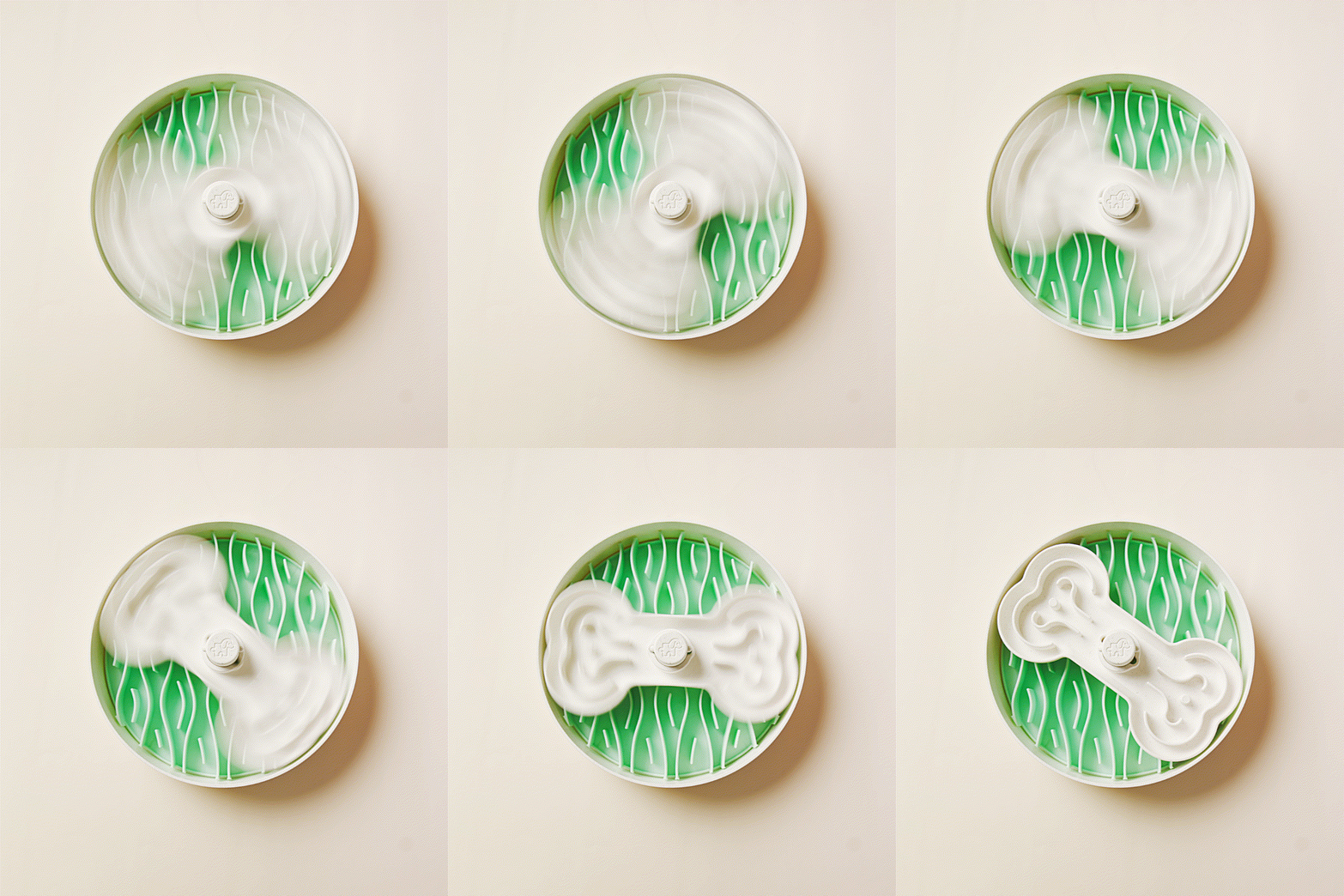
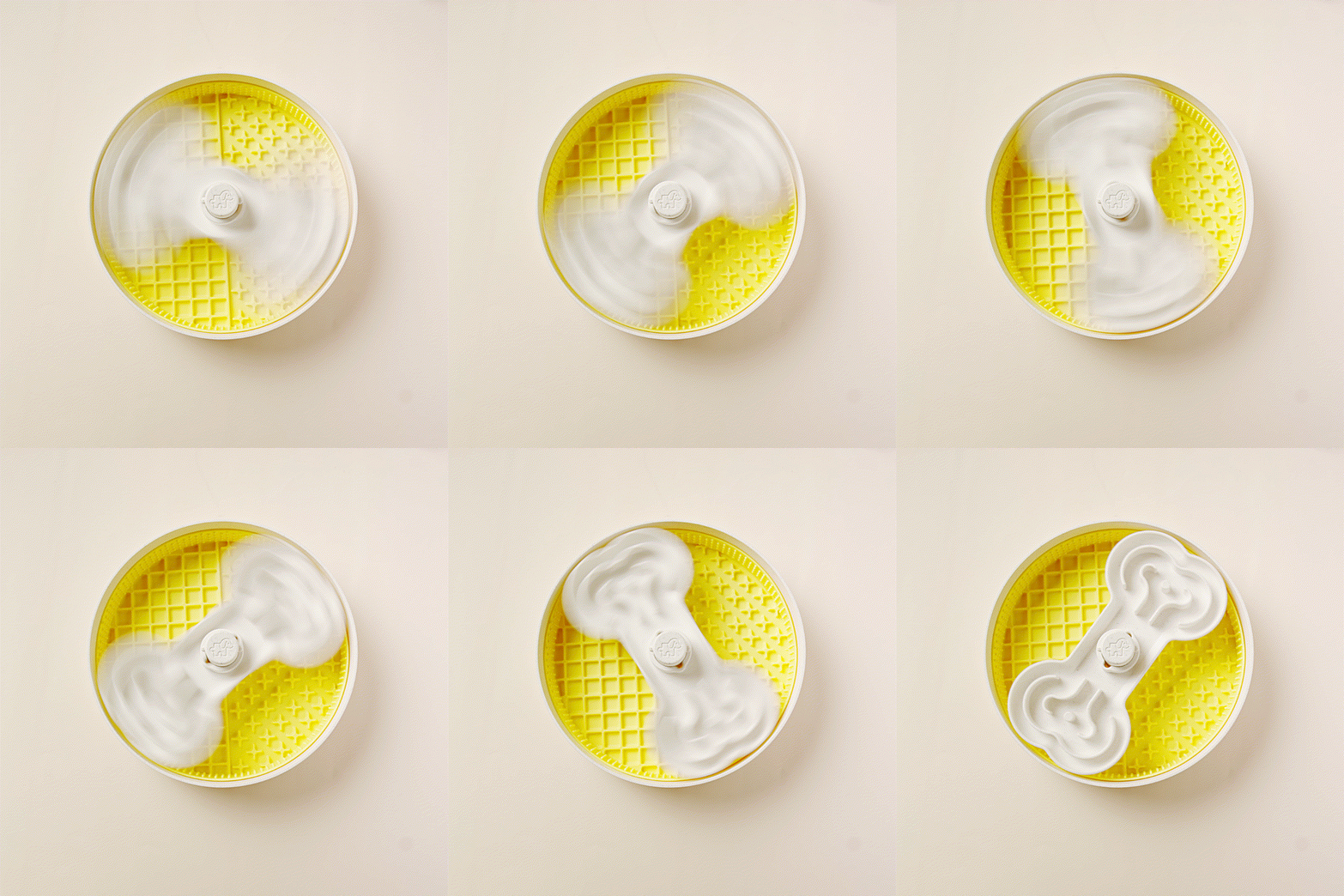
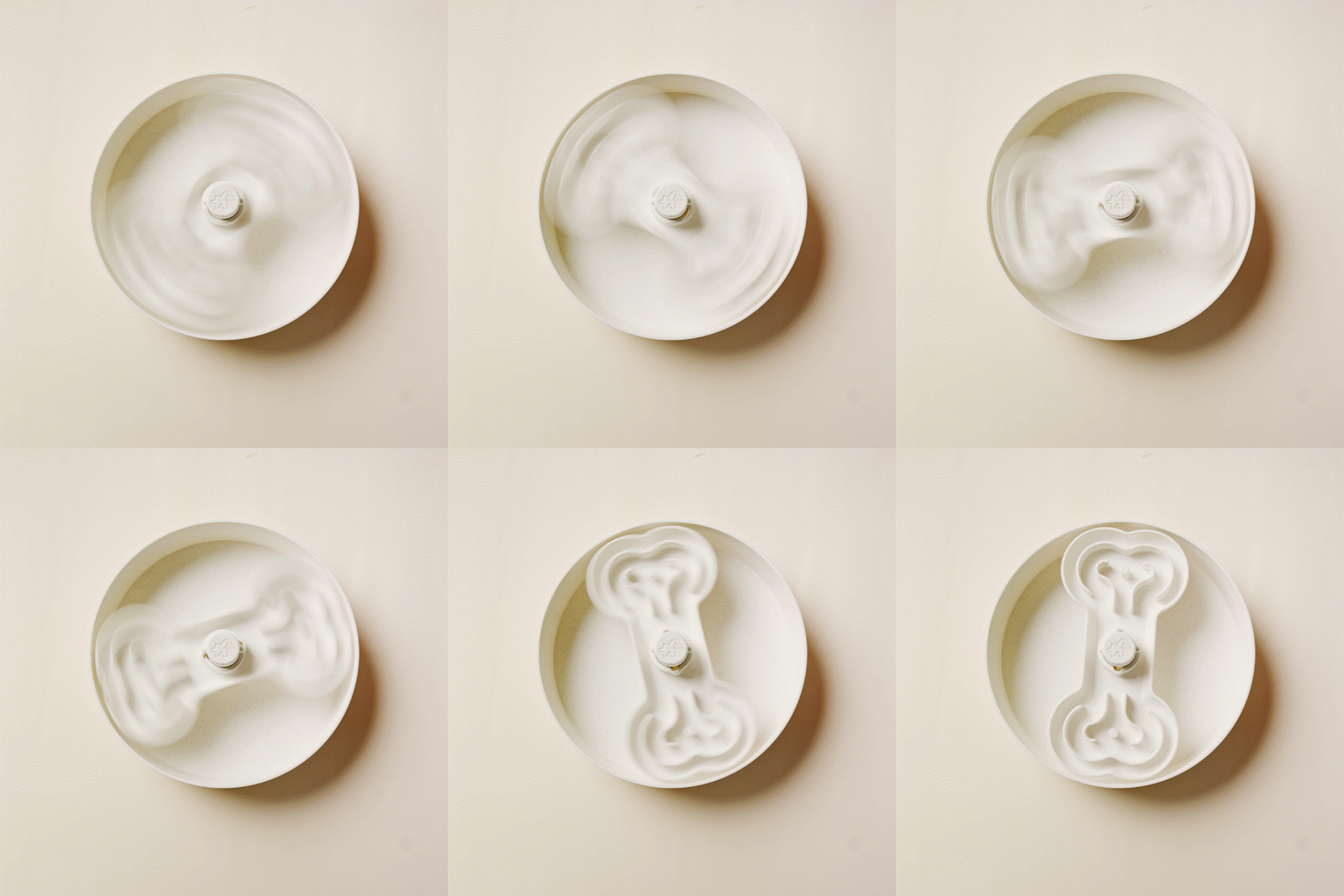
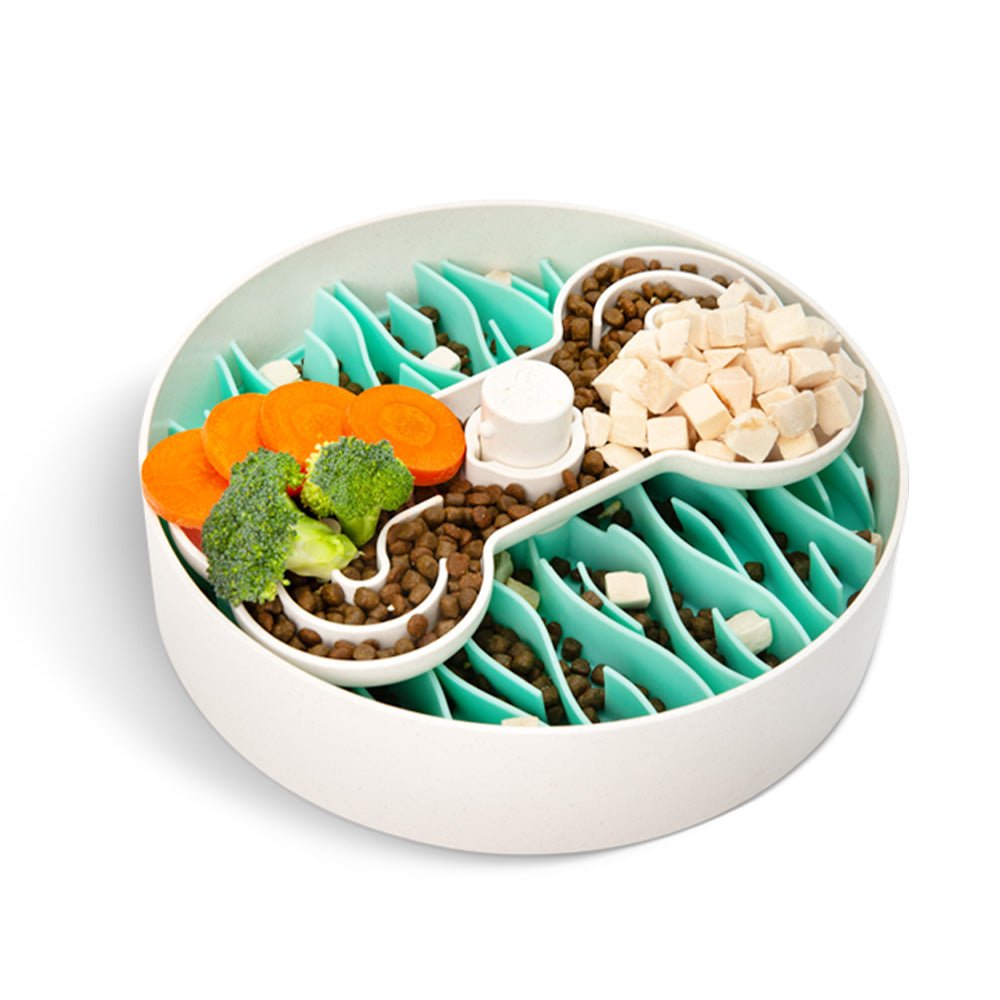
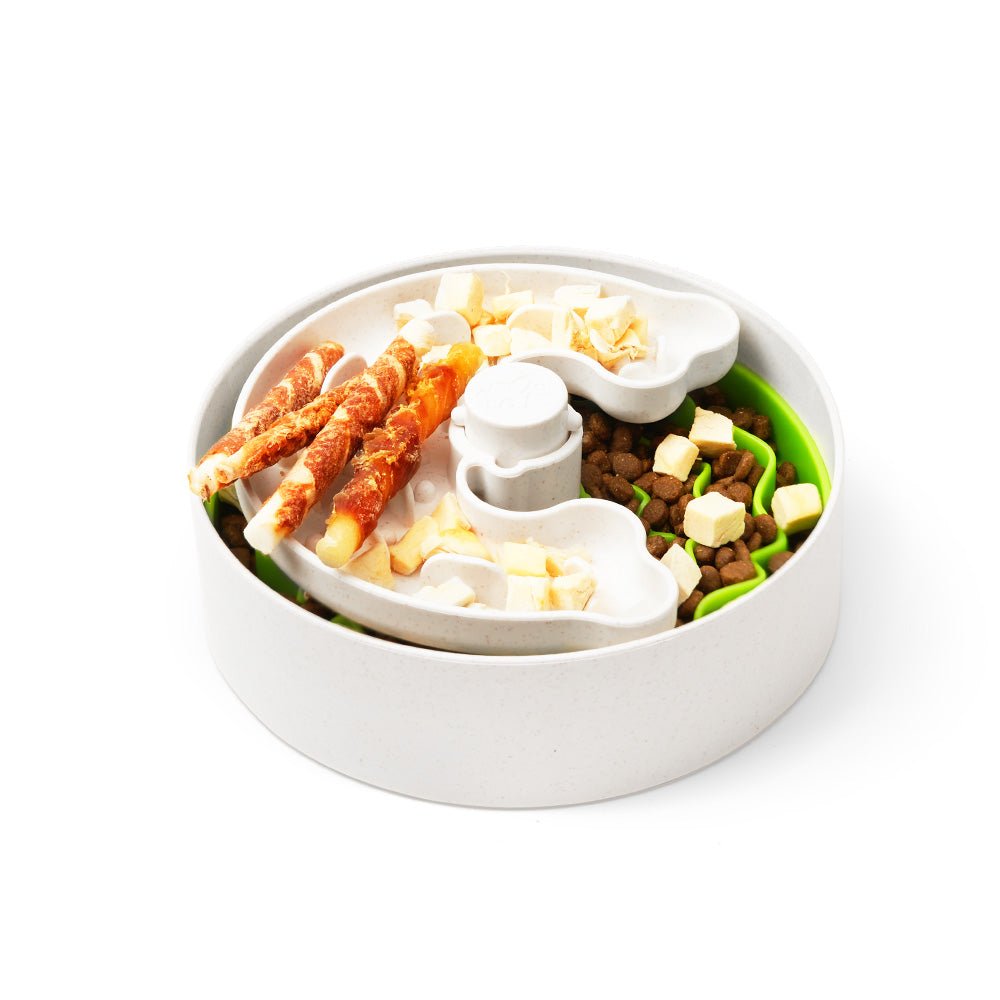
This is the simplest upgrade if your bowl is modular. The Puzzle Feeder Wave has three detachable parts (the bowl, a "Broken Wave" slowing insert and a spinning bone plate) that combine into four feeding modes. Start with the open bowl, add the slowing insert, then add the bone plate for the full setup, which slows eating by up to 15x compared with a regular bowl.
2. Change the food texture
Dry kibble rolls through channels fast. Soaked kibble, wet food or raw food has to be licked and nudged out of every groove. Mixing a spoonful of wet food into kibble is often enough to add a minute or two.
3. Smooth a "lid" on top
After filling the bowl, spread a thin layer of something your dog already eats safely, such as plain pumpkin or plain unsweetened yogurt, over the food. Your dog has to lick through the top before reaching the meal underneath.
4. Freeze it
Freezing is the biggest single jump in difficulty, so use it once your dog is confident. Press wet food or soaked kibble into the grooves, smooth it flat and freeze for 2 to 4 hours. Start half-frozen. We walk through it step by step in can you freeze dog food in a slow feeder.
5. Split the meal across two puzzles
Put half the meal in the slow feeder and scatter the rest in a snuffle mat. Sniffing for kibble uses a different skill from licking grooves, so it keeps the challenge fresh. The Grass Snuffle Mat has 336 leaves to hide food in.
6. Rotate bowls
Dogs learn a pattern. Rotating between two different designs, for example a spiral maze like the Puzzle Feeder Swirl and a ridged bowl, keeps them from memorizing one layout.
Which change should I try first?
| Your dog right now | Try this next | Difficulty jump |
|---|---|---|
| Finishes dry kibble fast and calmly | Add an insert / harder mode, or mix in wet food | Small |
| Already eats wet food quickly | Add a thin pumpkin or yogurt "lid" | Small to medium |
| Confident with every mode | Freeze the meal (start half-frozen) | Large |
| Bored of the same bowl | Rotate designs or split the meal with a snuffle mat | Medium |
| Frustrated or walking away | Go back one step and add a few easy wins on top | Easier |
How do I stop my dog getting frustrated with a harder feeder?
- Change one thing at a time. A new insert plus frozen food plus a new bowl is too much at once.
- Leave easy wins. Drop a few pieces on top so the first seconds are rewarding.
- Keep it short at first. If a frozen meal is still mostly full after 20 to 30 minutes, let it thaw a little or go back a step next time.
- Supervise. Watch for chewing on the bowl, and pick it up once the meal is done.
- Ask your vet if your dog has a health condition or special diet before you change textures or toppings.
Can a slow feeder be too hard?
Yes. The goal is a calm, longer meal, not a dog that gives up hungry. Signs it's too hard include barking or whining at the bowl, flipping or carrying it away, or leaving a lot of food behind. When you see that, go back to the last level your dog finished happily and move up more gradually.
FAQ
How long should a meal in a slow feeder take?
There's no single number, but many owners aim to turn a meal that takes seconds into one that takes several minutes. Use your own stopwatch test and judge by whether your dog eats calmly.
Can I use a lick mat insert to make the bowl harder?
Yes. The Wave can take a Licking Mat Insert or Sniffing Mat Insert, which turns it into a lick bowl for spreadable foods or a sniffing challenge. For a separate lick bowl, the Puzzle Licker works well with frozen fillings.
Is freezing safe for every dog?
Most dogs enjoy it, but supervise and start half-frozen. If your dog has dental issues or a medical condition, ask your vet first.
My dog figured out the spiral bowl. What next?
Try wet food, a thin topping or freezing in the same bowl, or rotate to a modular bowl with more levels so the layout changes.
Ready to level up dinner?
If your dog has outgrown their current bowl, a modular feeder lets you raise the challenge without buying a new bowl every month. Use code PZFDNEW10 for 10% off the Shop All collection. Free US shipping on orders $40+ (Canada $60+ CAD) and 30-day returns.
Not sure which bowl fits your dog's size and eating style? Read Which Puzzle Feeder is right for my dog?

댓글 남기기
모든 댓글은 게시 전 검토됩니다.
이 사이트는 hCaptcha에 의해 보호되며, hCaptcha의 개인 정보 보호 정책 과 서비스 약관 이 적용됩니다.