


The easiest way to adjust your dog's feeding schedule for daylight saving time is to shift meals gradually: move breakfast and dinner by about 15 minutes every day or two until they line up with the new clock. When clocks fall back on Sunday, November 1, 2026 (US and Canada), a dog who eats at 6:00 pm will feel like dinner is an hour late, so easing the change over 4–7 days keeps mealtimes calm instead of chaotic.
Why does daylight saving time confuse dogs?
Dogs don't read clocks, but they are excellent at noticing routines. Daylight, your alarm, your commute and the sound of the kibble bag all tell your dog when food is coming. When the clock falls back an hour, all of those cues move at once, except your dog's internal sense of "it's dinner time." That's why so many owners see the classic fall-back behavior: a dog staring at the bowl, pacing, or nudging you an hour before dinner.
The change itself isn't a problem. The sudden jump is what makes some dogs restless, so the goal is to make the shift small enough that your dog barely notices.
How do I shift my dog's meals step by step?
You can start a few days before the time change, or start the day after. Both work. Here is a simple plan for a dog who normally eats at 7:00 am and 6:00 pm:
| Day | Breakfast (new clock) | Dinner (new clock) |
|---|---|---|
| Sun, Nov 1 | 6:15 am | 5:15 pm |
| Mon, Nov 2 | 6:30 am | 5:30 pm |
| Tue, Nov 3 | 6:45 am | 5:45 pm |
| Wed, Nov 4 | 7:00 am | 6:00 pm |
If your dog is relaxed about change, you can move in 30-minute steps instead. If your dog is very routine-driven, stay on each step for two days. Treat it as a guide, not a rule.
- Move walks and potty breaks with the meals. Food and bathroom timing are linked, so shift them together.
- Keep portions the same. You're changing the timing, not the amount.
- Stay consistent on weekends. A sleep-in Saturday can undo a week of progress.
What if my dog begs for dinner an hour early?
This is the most common fall-back complaint. A few ideas that help:
- Don't feed on demand. Giving in to the stare teaches your dog that staring works.
- Fill the waiting time with a short activity. A sniff walk, a few minutes of training, or a lick bowl with a spoonful of their regular wet food can take the edge off the wait.
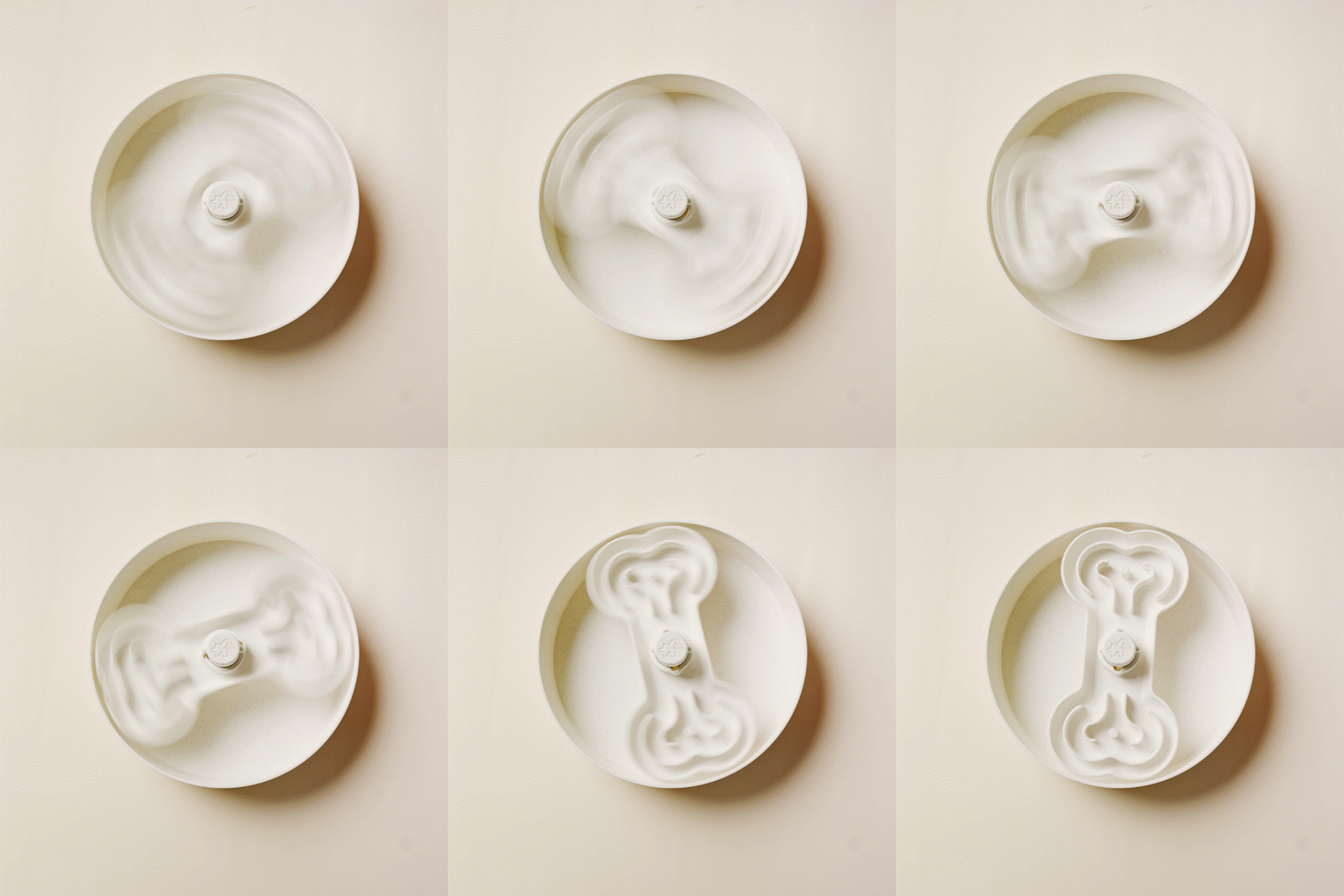
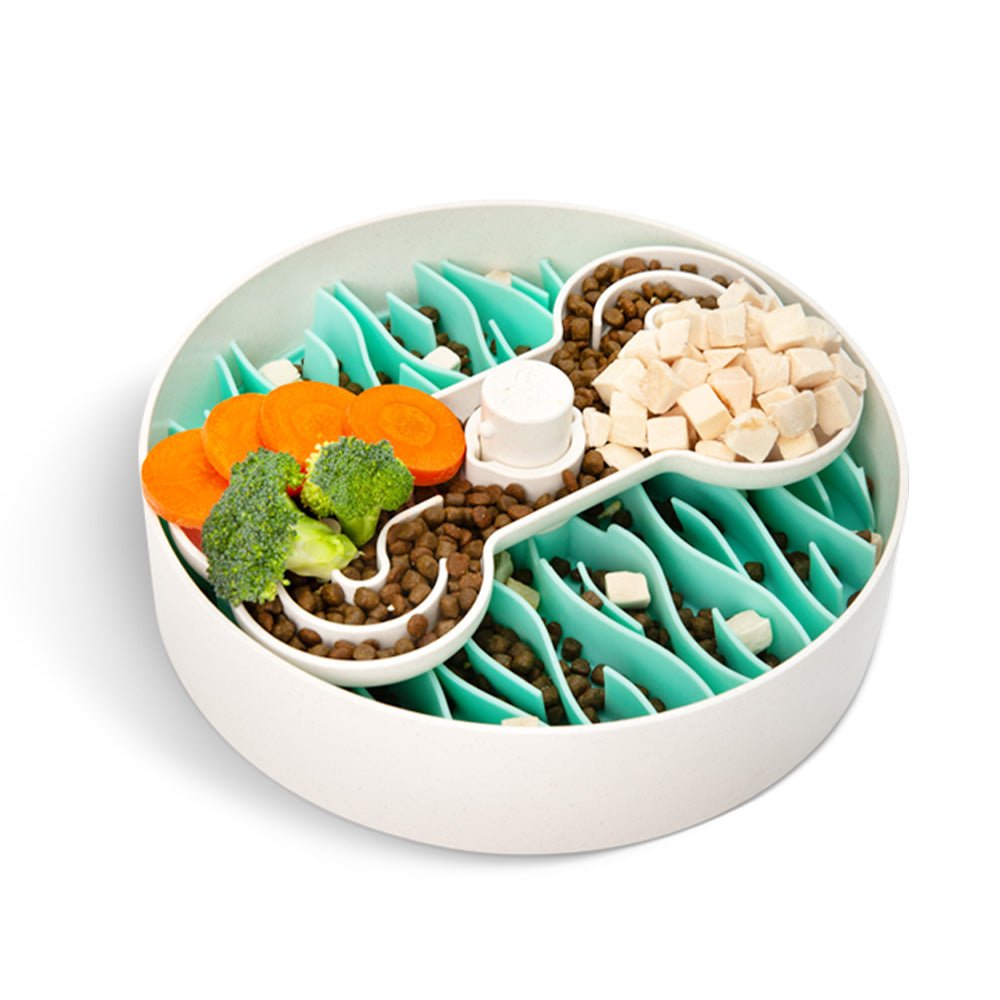
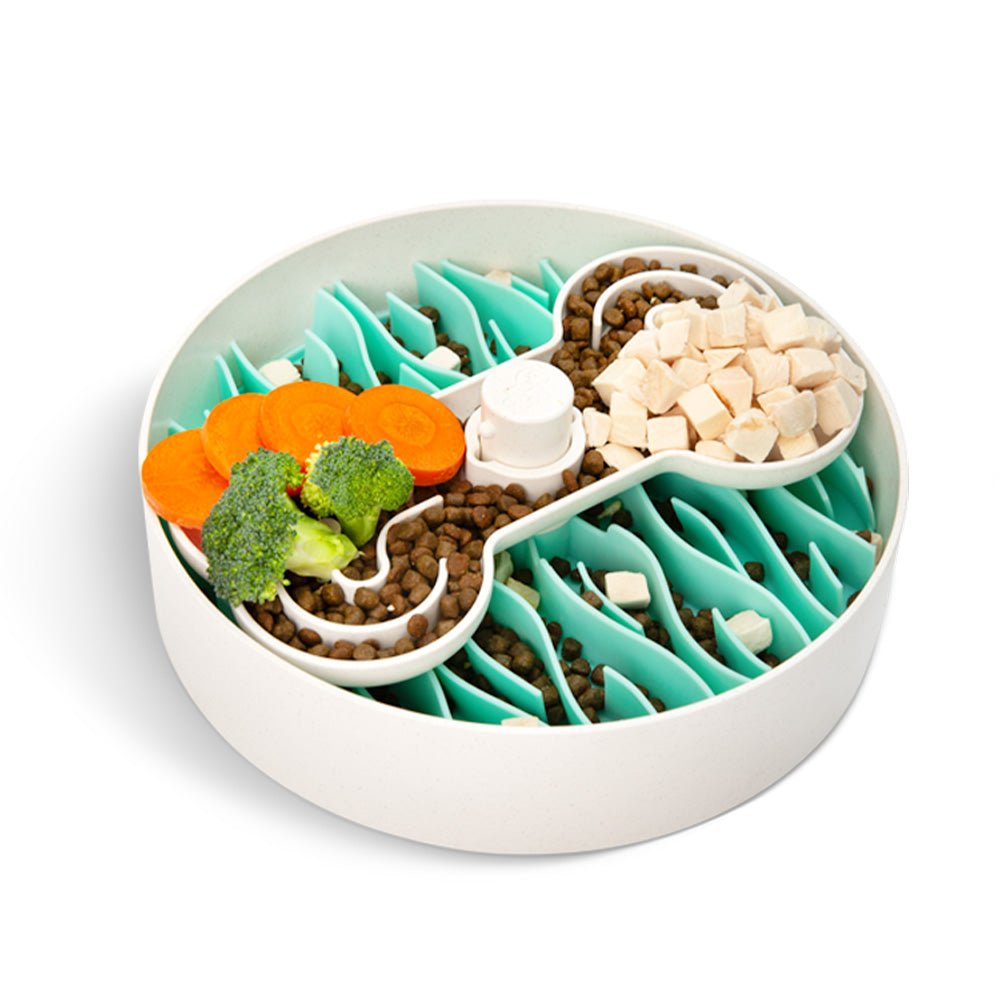
- Make dinner last longer. A dog who finishes dinner in 30 seconds is more likely to feel the meal was "too short." A slow feeder or puzzle feeder turns the same portion into a longer, calmer meal, which many owners find helps evenings settle down.
If your dog's appetite, energy or digestion changes noticeably and doesn't settle within a week or so, ask your vet. Changes in appetite can have many causes beyond the clock.
Should I change the schedule before or after the time change?
Either works. Starting a few days early means that by Sunday your dog is already on the new time. Starting on Sunday is easier to remember. Pick the one you will actually stick to.
For puppies, seniors and dogs on a strict feeding or medication routine, ask your vet how to time the change, especially if meals are tied to medication.
How can I make darker evenings easier on my dog?
After fall-back, the evening walk often happens in the dark and some dogs get less outdoor time. Indoor enrichment helps fill the gap:
- Sniffing games: scatter part of dinner in a Grass Snuffle Mat (336 leaves to search through) so your dog uses their nose for a few minutes.
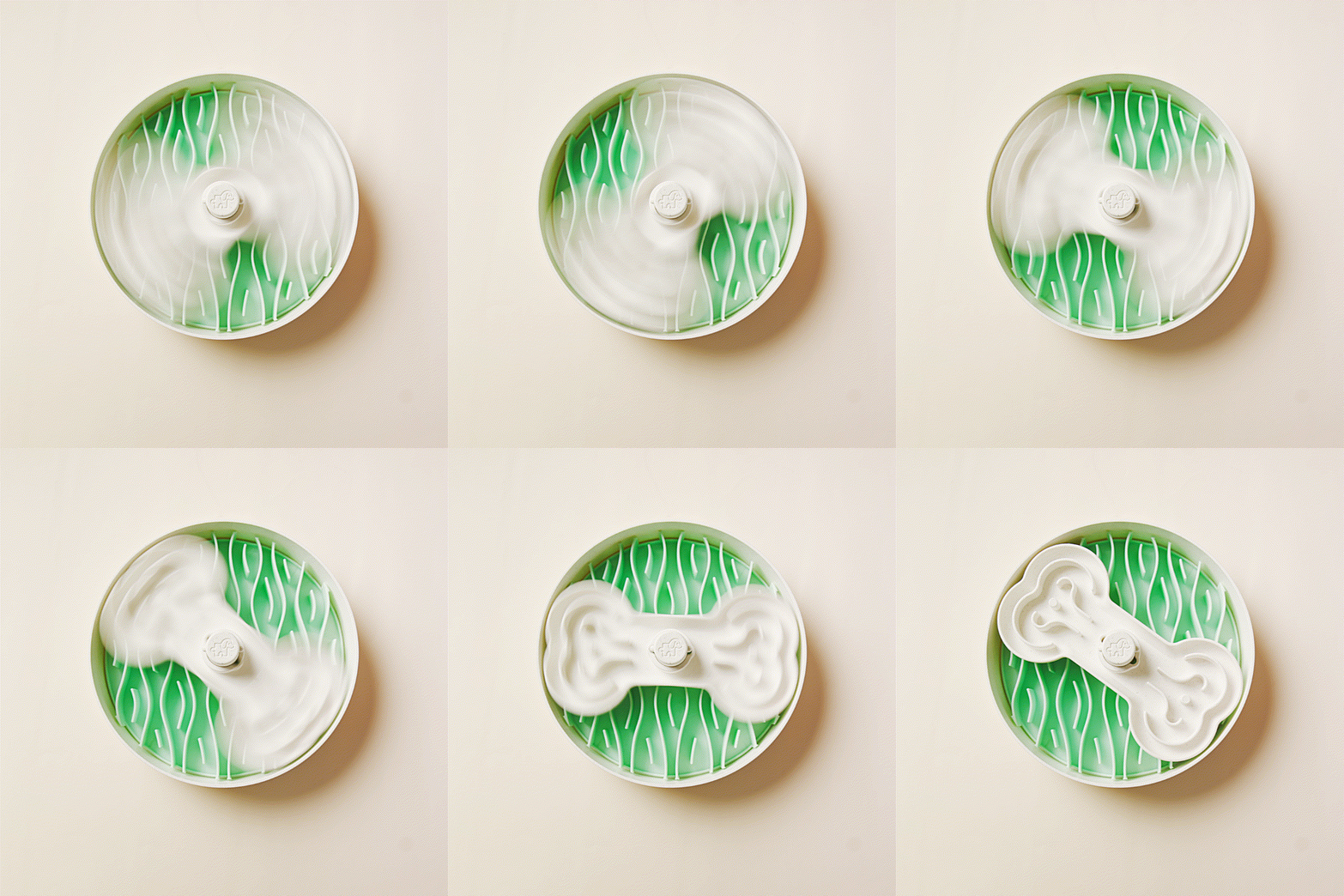
- Maze meals: a spiral bowl like the Puzzle Feeder Swirl turns kibble into a path to follow instead of a pile to inhale.
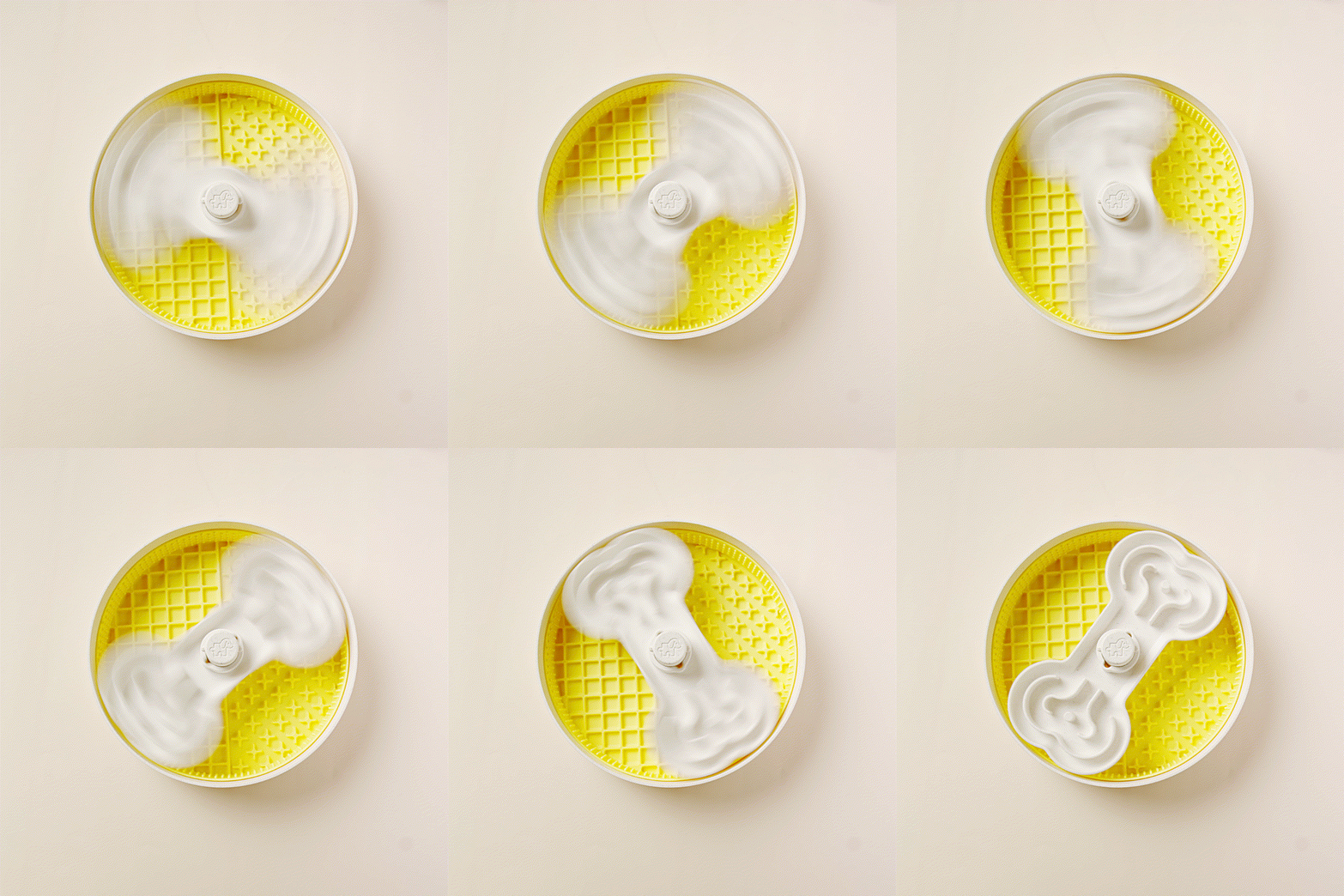
- Licking time: a Puzzle Licker spread with wet food or plain pumpkin is a quiet, wind-down activity for the evening.
- Visibility on walks: a reflective collar or light-up leash makes dark walks safer for both of you.
Quick fall-back checklist
- ☐ Write down your dog's current meal and walk times
- ☐ Plan 15-minute shifts over 4–7 days
- ☐ Move walks and potty breaks with the meals
- ☐ Have a sniff or lick activity ready for "early dinner" begging
- ☐ Keep weekends on the same schedule
- ☐ Check with your vet for puppies, seniors or dogs on medication
FAQ
Does daylight saving time affect dogs?
It can. Dogs follow routine, so when walks and meals suddenly move by an hour, some dogs act restless or hungry early for a few days. Most adapt within about a week, faster with a gradual shift.
Can I just switch my dog's meals to the new time overnight?
Many easygoing dogs cope fine with an overnight switch. If your dog gets pushy or anxious around food, a gradual shift is kinder and usually smoother.
How long does it take a dog to adjust to the time change?
For most dogs it's a few days to a week. Following the 15-minute plan above usually means the switch is complete in under a week.
My dog wakes me up an hour early for breakfast. What can I do?
Shift breakfast in small steps, avoid getting up to feed on the first nudge, and make dinner last longer with a slow feeder so it feels like a proper meal. If early waking continues, talk to your vet or a trainer.
Does a slow feeder help with mealtime routine changes?
A slow feeder doesn't change the clock, but it turns a 30-second meal into a longer, calmer one, which many owners find helps their dog settle after dinner. You can see how it works in our article Do Slow Feeder Bowls Actually Work?
Make the new dinner time worth the wait
A small, gradual change plus a little extra enrichment is usually all it takes to get through fall-back without a week of staring at the bowl. If you'd like to try a PuzzleFeeder, use code PZFDNEW10 for 10% off the Shop All collection, with free US shipping on orders $40+ (Canada $60+ CAD) and 30-day returns.
Not sure which one fits your dog? Take a look at our guide: Which Puzzle Feeder is right for my dog?

댓글 남기기
모든 댓글은 게시 전 검토됩니다.
이 사이트는 hCaptcha에 의해 보호되며, hCaptcha의 개인 정보 보호 정책 과 서비스 약관 이 적용됩니다.